Punk rock hairdo. Belted kingfisher yesterday at Tommy Thompson Park.
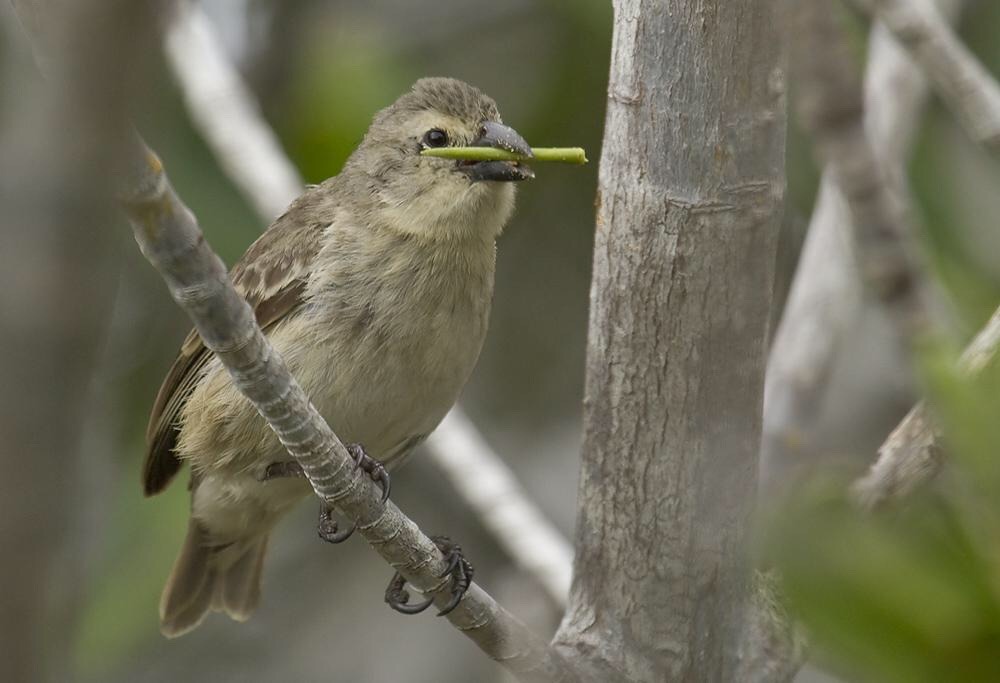
the woodpecker finch, a small finch native to the galapagos islands, is one of few non-corvid or psittacine bird species known to use tools. the finches use tools in up to 50% of their foraging, using sticks or cactus spines to access grubs and insects.
This GIF shows how the toucan releases heat using its beak to cool itself off.
The toucan beak isn’t just beautiful, it’s also an adjustable thermal radiator that the bird uses to warm and cool itself. When the bird is hot, the blood vessels in their beak open up to allow more circulation to enable heat to escape. Birds can’t sweat so evolution has come up with some life hacks to get the job done. [video]
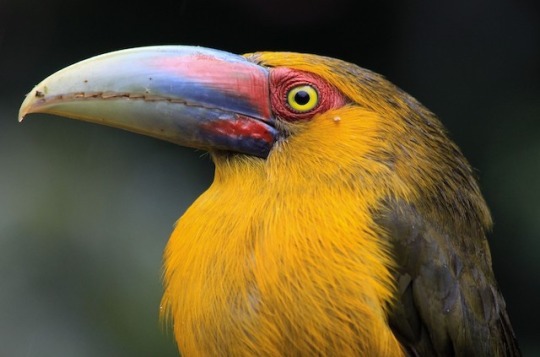
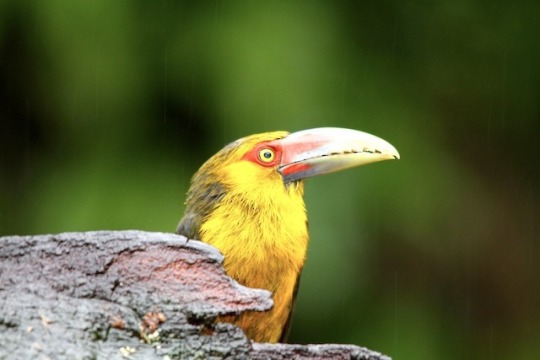
the saffron toucanet is a relatively small member of the toucan family native to rainforests of south america. toucanets are smaller than toucans and have a relatively smaller beak. the saffron toucanet is named for its cheery yellow head and chest. like other toucans, the saffron toucanet feeds on fruit and occasionally insects and small animals.
the cerulean warbler is native to the eastern portion of the united states, with a wintering range in south america. these small warblers feed off of insects and fruit, mainly catching insects in flight. they are currently considered ‘vulnerable’ by the iucn, as they are the fastest declining warbler species; habitat loss has taken a huge toll on their population, which has plummeted in recent years.
the american avocet is a wading bird found in north america. though they once had a much larger range, hunting and habitat loss has impacted the avocet. avocets use their distinct curved beak to sweep through shallow water for crustaceans, insects, and small fish.
this newspaper clipping from 1962 shows a pigeon born with two extra legs. it’s surprising this bird made it to adulthood, as often birds with extra legs also have lots of health issues.







 today's bird