the bourke’s parakeet is a small parrot native to australia. considered a ‘grass parrot’, the bourke’s parakeet mainly forages for grass seeds. the parakeets live in small flocks (though their numbers can grow during drought) and mate for life.
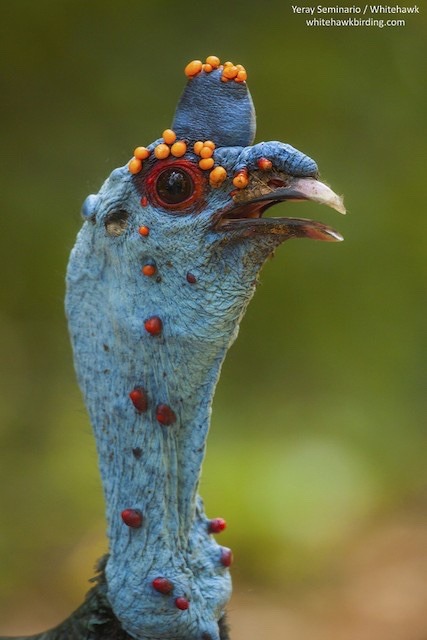
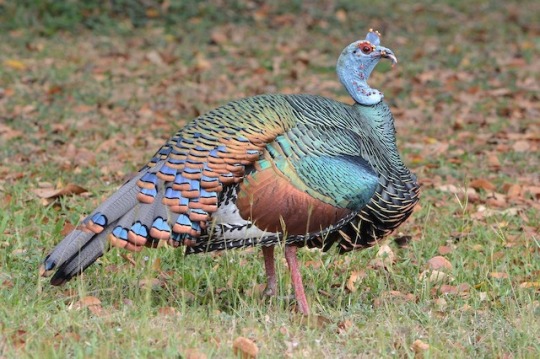
though they are the closest relative of the north american wild turkey, the ocellated turkey looks wildly different in appearance, and while still being a large bird, is much smaller. this turkey is found only in a small range of mexico and an even tinier portion of south america. both males and females have a distinctive blue head and bright feathers with a metallic sheen. ocellated turkeys feed off of fruits, plant matter, and insects, and forage on the ground in flocks. at night they roost in trees to avoid predators such as jaguars, but spend the majority of their time on the ground.
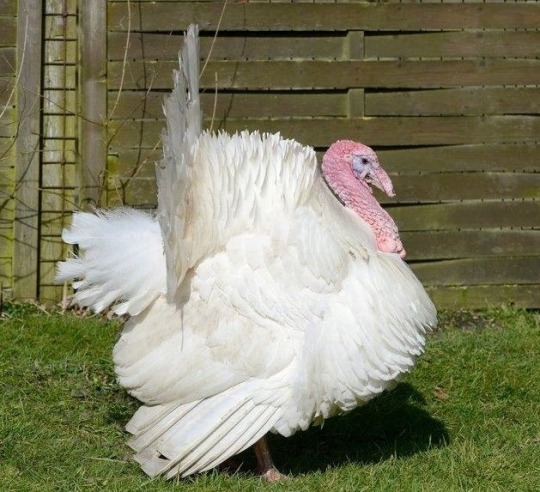
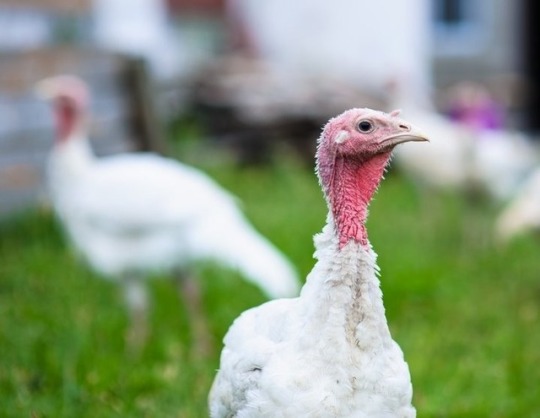
the broad breasted white is the most widely commercially used turkey; they are bred exclusively for meat production. these turkeys are so heavy that they mainly are bred through artificial insemination, as they cannot typically naturally mate, and are also flightless. even if spared from slaughter, broad breasted whites typically only live to around two years old; they suffer from obesity-related issues such as heart disease. they have an incredibly fast growth rate, and typically reach 35-40 pounds.
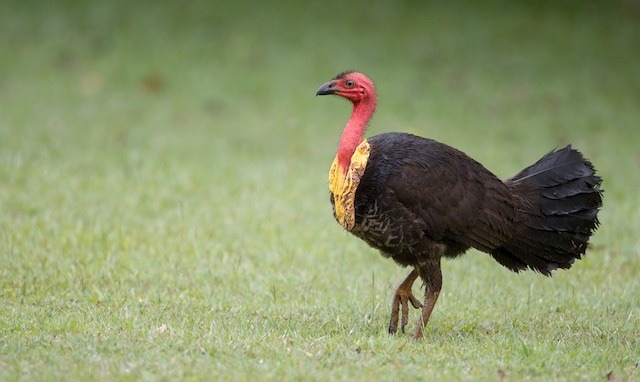
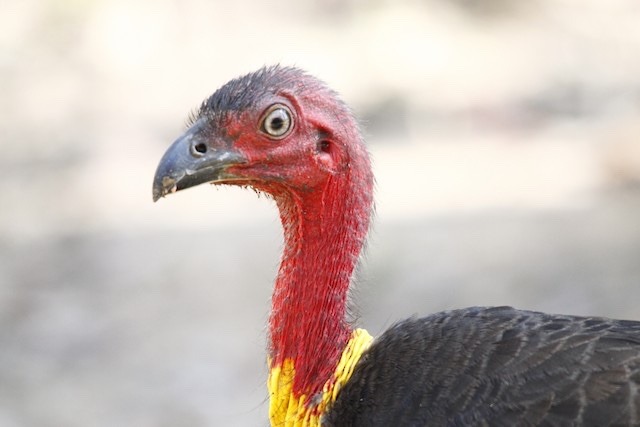
the australian brushturkey is a large bird native to much of australia. despite their name, the brushturkey family is not closely related to american turkeys. though they share some similar traits, such as body shape and similar diets, the australian brushturkey is renowned as a unique bird. males build enormous nests, sometimes around eight feet in width, out of decomposing leaves and plant material. eggs are buried within, and the decomposing matter incubates them. brushturkey chicks are precocial, and leave the nest as soon as they have dug themselves out of the mound, with no help from their parents.
Disclaimer: I was hesitant to post this, but I really want people to see what these birds are capable of. So, I’ll just start off by explaining that I am an undergraduate researcher in an Animal Behaviour and Welfare lab at a fairly reputable agricultural/veterinary university. The work that I and my colleagues do seeks to improve the lives of poultry in commercial farms across the world, first and foremost. I am a vegetarian, and while I don’t support any animal meat industry financially, I recognize that it does help feed millions of people worldwide who do not know better or have the choice to go vegan/vegetarian, and until that is able to completely change, there is a need for solid science that supports animal welfare and argues for better quality of life for them in the meantime. That said, the turkey poults in this video are research animals who belong to my university’s poultry research station, and are kept in conditions designed to mimic a commercial farm setting. They still have a much better quality of life than that of a “real” commercial turkey (i.e. more space, and positive human interaction from me), but I would still personally be happiest seeing these girls roaming free in the grass and sun like my chickens and ducks at home. Sadly, though, I’m no longer in a position to adopt any more of my lab’s birds…
Last week, I posted about the “ABCs” of animal behaviour and training, along with a video of one of my hens doing some short flights to my arm. Training them to step up or fly onto a perch/arm is one of the first things I do with any bird, be it a chicken, raptor, or parrot. The next behaviour most bird owners will train is targeting. Targeting is when an animal learns to touch a specific body part to a certain location/object. The most common example of targeting is actually teaching a dog to sit – the dog is targeting its rear end to the floor. With birds, people typically train them to touch their beak to a “target” stick. I’ve done this in the past with the falcons I work with, and the hens at home picked it up quickly as well. But, I wanted to see if the turkey poults at the lab could learn it as well. I’d been hearing a lot of people making comments about how “dumb” turkeys are, and naturally, I wanted to give the birds more respect and prove the skeptics wrong. In addition, the actual research project I’m doing with these turkeys is quite demanding of them, to say the least, so I figured I owed it to them to give them something enriching and fun to do during our breaks.
As always, I started by training the babies to respond to a bridge – the clicking sound I make with my mouth. You’ve probably seen people buy/use handheld clickers for training cats and dogs, but this is another one of those things that really isn’t necessary. Most bird trainers will not use these, as it takes away the use of one of your hands, and if you have a bird perched on one hand you really need the other one to be free. Your bridge doesn’t have to come from a fancy clicker, nor does it have to be a click at all. It just has to be any stimulus that is clearly perceived by the animal, that you can produce quickly and consistently – a whistle, verbal praise, etc. will do just fine. The turkeys were slow to pick this up over the first week within hatching or so (but let’s face it, all babies are dumb), but they were able to associate it (and my presence) with yummy canned corn eventually.
Next, I had to shape the targeting behaviour using successive approximations. This is animal trainer gobbledygook for: start simple, then work your way up. The poults were naturally curious enough to peck at the target stick when I first introduced it, so I would reinforce any attempt to peck any part of the stick at first. Then, I would only reinforce pecks that were aimed at the duct tape. Once that was down, the turkeys were eager to follow the stick/me around their cage, and peck it for some corn. The stick was not scented/baited in any way – they really did learn to target to it for a reward. Many zoos will do this with their animals as an enriching activity, or to make both the zookeepers and animals’ lives a bit easier – for example, instead of having to stressfully chase and then shove an animal into a crate/holding area when their enclosure needs to be cleaned, keepers can simply target the animal into the crate, and clean away while it enjoys a reward. I’ll repeat from my last post: giving animals in captivity some control over their environment by giving them a choice to actively engage in activities like this is so important for their emotional and psychological health.
Here are some videos of professional target training done in various zoos with rhinos, hornbills, and monitor lizards! You can look up tons of other examples like these online yourself:
it’s so bizarre how our view of animals really depends on location. like in australia a lot of people consider cockatoos pests (or at best, very noisy) where in other parts of the world they are coveted as exotic pets. i saw tourists taking pictures of squirrels because they didn’t have them where they were from; which is crazy to me because i rarely give them second thought.





 today's bird