

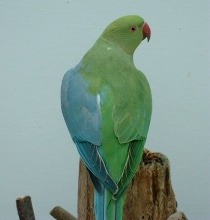
this bird is a ‘half-sider’ indian ringneck parakeet. half-siders cannot be intentionally bred; they are the result of two fertilized eggs merging early in development.
source: (x)
this bird is a ‘half-sider’ indian ringneck parakeet. half-siders cannot be intentionally bred; they are the result of two fertilized eggs merging early in development.
source: (x)
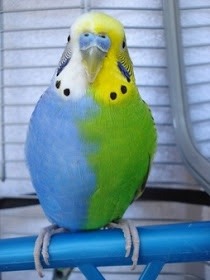
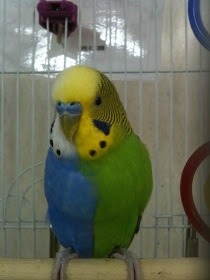
this is twinzy, a ‘half-sider’ budgie. twinzy is the result of two fertilized eggs merging during development.
source: (x)
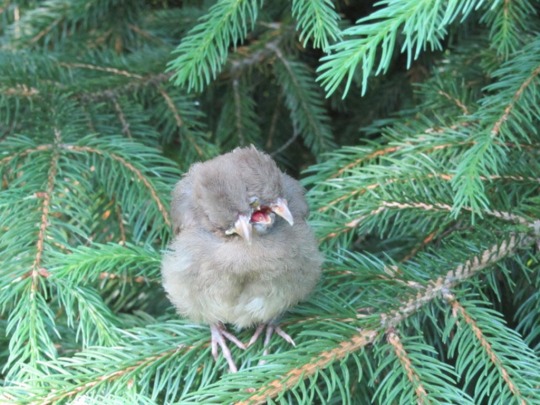
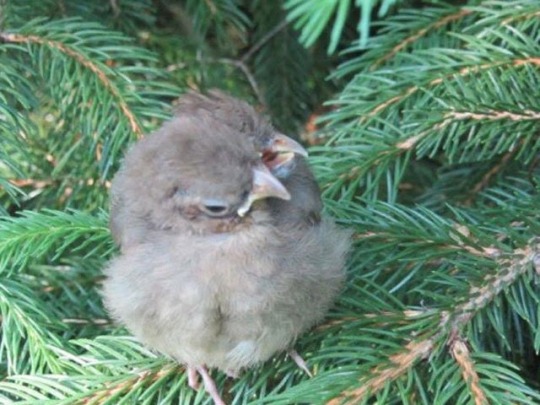
this little northern cardinal was discovered in massachusetts with two heads and three beaks.
source: (x)
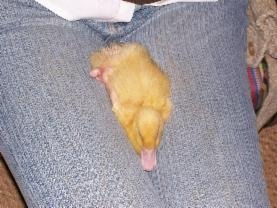
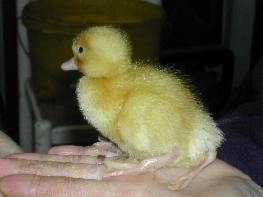
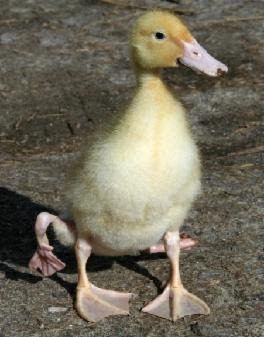
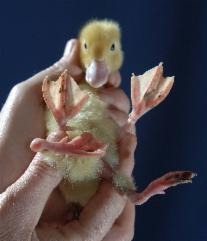
this is stumpy, a duck born with a rare genetic mutation – two extra legs. despite skepticism, stumpy lived to adulthood, though he now has only two legs. stumpy’s dna is being analyzed to better understand genetic mutations in both animals and humans.
source: (x)
every photo of a shoebill eating is progressively worse than the last
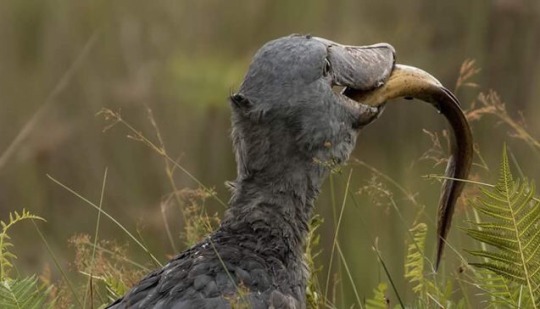
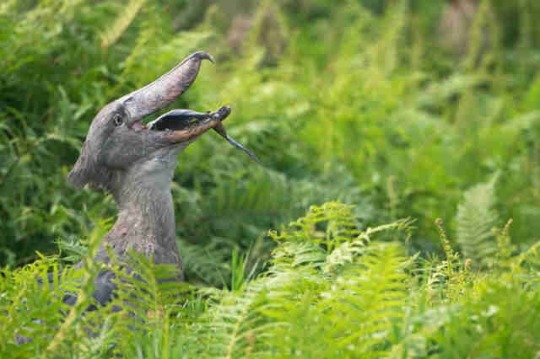
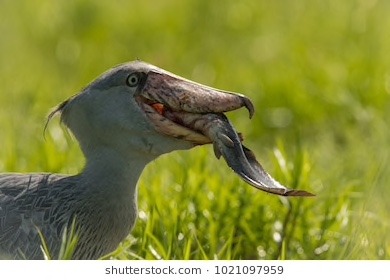
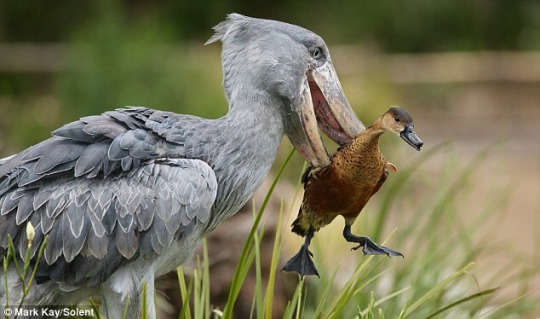

the shoebill, also called the whalehead, is a very large bird closely related to storks and pelicans. the shoebill is native to tropical east africa.
shoebills hunt by remaining still, sometimes for hours at a time, until their prey walks or swims close to them. they lunge and catch their prey, shaking their bill so they don’t ingest dirt or water. then, they decapitate the animal with the sharp end of their bill, and swallow them whole. shoebills regularly consume large fish, frogs, snakes, water monitors, and young crocodiles. they are also known to eat waterfowl, snails, turtles, and rodents. one unproven report claims shoebills ate antelope calves.
the shoebill is normally silent, but during bill-clattering displays in the nesting season, make cow-like moo sounds and whines. the bill clattering itself is said to sound similar to a machine gun.

shoebills are large birds, measuring from 43-55in in height, with a wingspan of 7ft 7in to 8ft 6in. males and females are similar, but males tend to weigh up to a pound more.

the shoebill has suffered from habitat destruction and hunting. its wild population is estimated to be between 5,000 and 8,000 individuals. the shoebill is now classified as ‘vulnerable’ for this reason. conservation efforts are being made to restore the shoebill’s natural habitat – hopefully their numbers will increase soon.

image sources: (x)
 today's bird