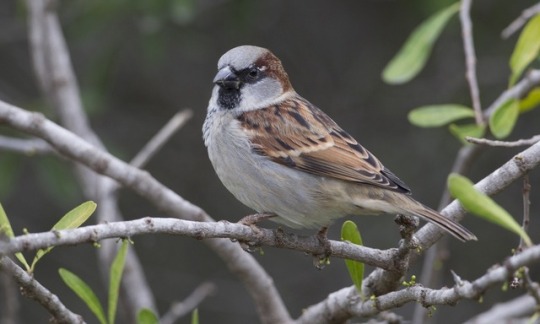
This is a house sparrow dad feeding his teenager from a fat ball at my bird feeder. I thought it was very funny that the dad took the seeds out of the fat ball and fed them to his teen, who was sitting right next to him! I think it might be one of those lazy spoiled teenagers. Hihi!
____
aww! thanks for sharing, i love sparrows!
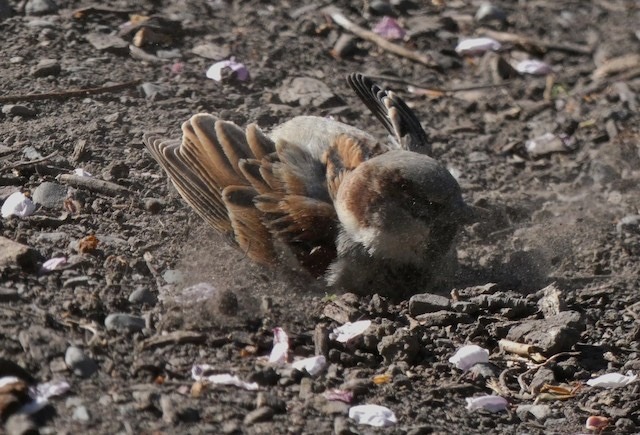
a house sparrow dustbathes on the ground. most birds produce oil from their preen gland that is used to keep the feathers healthy; dustbathing helps regulate the amount of oil on the feathers, and also can assist with removal of parasites from the body, penetrating to the skin where the bird may not be able to remove them.
the yellow-throated sparrow is a small passerine bird native to middle-eastern asia. yellow-throated sparrows differ from most sparrows by their thinner, pointed beak.
yellow-throated sparrows are sexually dimorphic. females have either a very small amount of yellow on the throat or none at all, and they lack the chestnut shoulder patches.
these sparrows feed off of grains, seeds, fruits, insects, nectar, and berries. they also enjoy some flower petals, and are sometimes seen with pollen covering their heads.
the yellow-throated sparrow is relatively common and is rated least concern by the iucn.
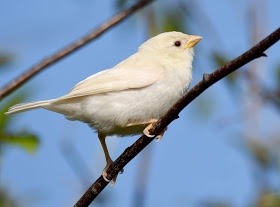
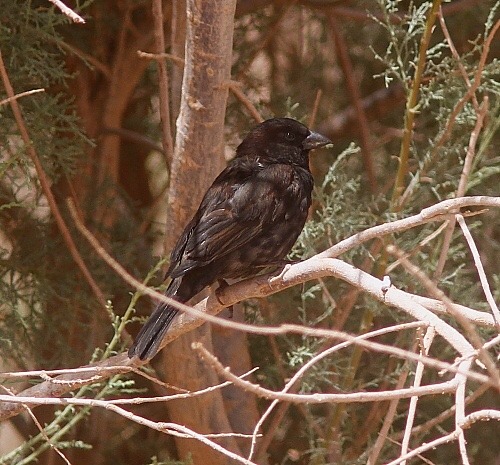
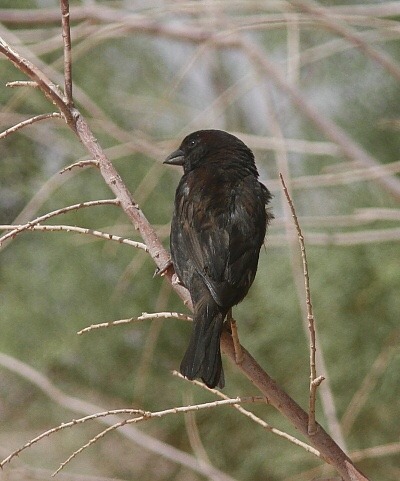
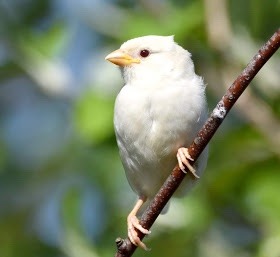
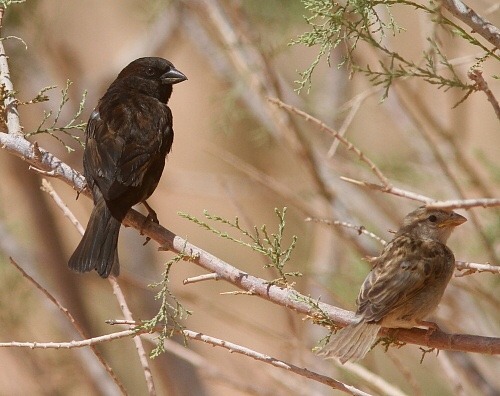
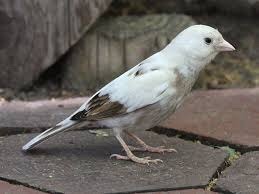
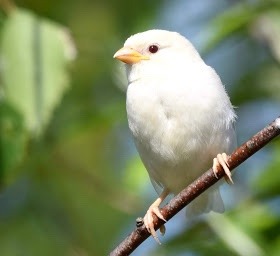
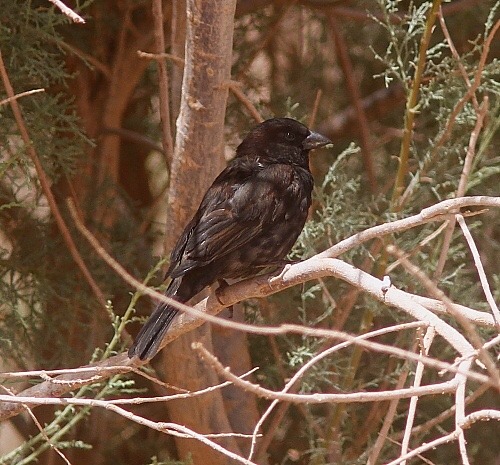
side-by-side comparisons of an albino house sparrow and a melanistic house sparrow. albinism results from a lack of the pigment melanin, and melanism results from an overproduction of that pigment.
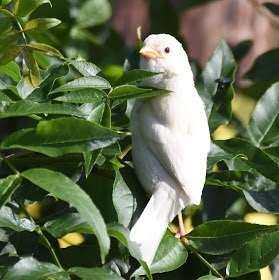
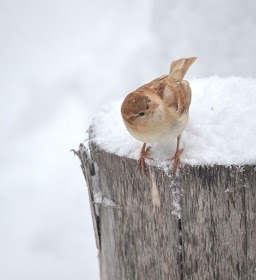
this unusually golden house sparrow is its strange color due to a genetic mutation called leucism. leucistic animals lack correct pigmentation, and can be varying shades paler than non-leucistic animals. leucistic birds have weaker feathers, and tend to be easy targets for predators, meaning that their rarity is increased since many of them don’t make it to adulthood.
this house sparrow is unusually dark because it is melanistic. animals that have a genetic mutation called melanism overproduce dark pigments, leading to unusual appearances like that of this bird.
the java sparrow is a small passerine bird native to parts of indonesia (though it has established feral colonies in other places). the java sparrow is also known as the java finch and the java rice-eating bird.
like the name rice-eating bird may imply, in some places the java sparrow has become an agricultural pest. naturally, the sparrow feeds off of grains and seeds, but they have been known to feed extensively in rice paddies. this has led to regulations on the sparrow, particularly in the us. in the state of california, it is illegal altogether to own a java sparrow.
despite this, the java sparrow remains a popular, well-loved pet. records of this bird in captivity date back to ming dynasty china. the java sparrow has remained a common pet in much of the world. it’s popularity in the us declined after laws were put in place banning import of wild birds. however, it is still well-known and well-loved. the java sparrow is known in captivity for its friendliness, ability to be a part of a mixed-species aviary, and relatively low maintainence.
in the wild, java sparrows live in large flocks. males and females are almost impossible for humans to tell apart, as they share the same plumage. however, the male performs a song and dance the female does not. java sparrows nest in trees, or buildings if given the opportunity, and raise 3-8 eggs.
unfortunately, recently the java sparrow has faced a decline in numbers. habitat loss and hunting have caused the java sparrow’s decline. they are now listed as vulnerable by the iucn. hopefully, this trend reverses and they become as common in the wild as they are in our households.
i see a lot of people beating up on sparrows, both online and in person. people don’t like them because they’re invasive, and disturb native birds and habitats. they’re loud and disruptive. they gather where people gather, and are therefore a nuisance. i’m biased; i really like sparrows. i spent a lot of time feeding them and watching them as a kid (and now, too) and got to know how big their personalities can be and also got to witness their intelligence and their ability to have complex social structures. we’ve given sparrows enough hell, in my opinion.
on that subject…let’s talk about the great sparrow campaign.
the great sparrow campaign also known as the “four pests campaign” and “kill a sparrow campaign” was one of the first actions taken during the Great Leap Forward between 1958 to 1962 in China. the campaign was introduced by chairman mao, as a hygiene campaign. four pests were identified as enemies – mosquitoes, flies, rats, and sparrows.
not only were sparrows viewed as unhygienic, they were seen as an agricultural pest, feeding off of crops of fruit and grain. the Chinese government also declared that “birds are animals of public capitalism,” fueling hatred of them. the objective of the campaign was to completely eradicate sparrows so they were no longer an issue. citizens were encouraged to chase the sparrows until they simply dropped to the ground out of exhaustion. sparrow nests were destroyed, eggs broken, and chicks and adults killed. citizens would follow sparrows, banging pots and pans and creating other disturbances, so sparrows would not have a chance to rest on tree branches. contests were held among enterprises, government agencies, and schools in “cleanliness”. rewards were given to those who handed in the largest amount of dead sparrows (or other pests).
while sparrow numbers dropped to near extinction in china, grain production did not rise. in fact, the resulting impact on crops was tragically one of the causes of the great famine. eurasian tree sparrows, the native species of china, are a natural predator of locusts and other crop-destroying bugs. locusts thrived and decimated rice paddies and other crops, and food production plummeted. an ornithologist named tso-hsin cheng pointed out that while sparrows consumed grain, they also consumed large amounts of insects. his influence caused chinese leaders to change their opinion. mao ended the campaign against sparrows, switching the focus to bed bugs. unfortunately, it was too little too late. the sparrow populations were already too low to control the locust, and food resources were low for years as a result.
thank you sparrows, for inadvertently helping us by cleaning up the real pests for us. please smile at your local sparrows and consider giving them a treat.





 today's bird