bird of the day: peach-faced lovebird

the peach-faced lovebird, also known as the rosy-faced lovebird, is a small parrot native to southwestern africa.

peach-faced lovebirds live in flocks – typically fairly small, though in some cases they can number in the hundreds. in captivity, they are known to be aggressive and typically don’t do well with other birds.
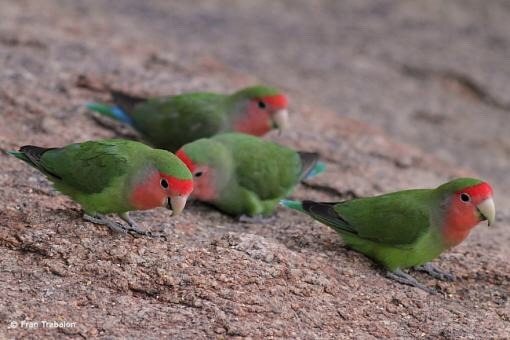
male and female peach-faced lovebirds are identical. juveniles have a paler peachy-grey face, paler green body, and sometimes splotches of black on the beak.

in the wild, the lovebirds only come in one color form: green. in the pet trade, they have been bred for many different color mutations.

peach-faced lovebirds feed off of seeds, berries, budding flowers, and foliage. they are sometimes considered an agricultural pest of crops such as millet.

peach-faced lovebirds’ numbers declined in response to capture for the pet trade and farming that destroyed their habitat. however, they are still very plentiful, and are known as a beautiful and charming bird that is loved both in the wild and as a pet.

image sources: (x)

bird of the day: the gouldian finch

gouldian finches, sometimes called the lady gouldian’s finch, gould finch, or rainbow finch, is a small finch native to australia.

these finches are social birds that live in large flocks. outside of the breeding season, they mingle with other species of finch, forming flocks that can reach 1,000-2,000 birds. they display this behavior in captivity as well – they are known to be great mixed aviary birds as they coexist well with other species. due to their social nature, these finches should not be kept as single birds.

gouldian’s finches are unusual in that they have naturally developed, widespread color mutations. gouldian finches naturally come in three different ‘morphs’ – red headed, black headed, and yellow headed. originally thought to be seperate species or subspecies, all of these color variations are one species.

gouldian’s finches are one of the only birds recorded controlling the gender of their offspring. when black-headed and red-headed finches mate, a large amount of female offspring die. females are known to breed with males with certain colors to increase their male offspring.

the gouldian’s finch is currently listed as ‘near threatened’ in the wild by the iucn. an estimated 2,500 individuals remain in the wild. they are threatened by fires decimating their habitat, as well as habitat loss from development. luckily, the gouldian finches have a healthy captive population, and we don’t have to worry about them disappearing anytime soon.

image sources: (x)

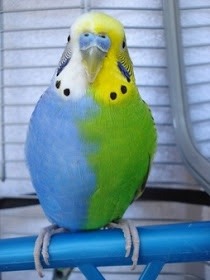
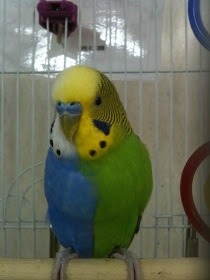
bird of the day: the budgerigar!

the budgerigar, also known as the budgie, parakeet, or shell parakeet, is a small parakeet native to australia (a feral population has also been established in florida). budgerigars are the third most popular pet in the world, directly behind the domestic dog and cat, which makes them the most popular pet bird. 

in the wild, budgies are part of large flocks. flocks have been witnessed to number in the thousands, though this is usually several flocks temporarily joining together for safety. they feed mainly off of seeds and grains, though fruit, vegetation and insects are also a part of their diet.

in the wild, budgies only come in green, but in captivity, they have been bred to display many different color mutations.

as well as being bred for color mutations, budgies have been bred for size and appearance. the english budgerigar is the only true ‘breed’ of parrot; it differs significantly from the regular budgerigar. english budgies are much larger and feature a more pronounced head shape. unfortunately, english budgies sacrifice health for their appearance; they typically have a shorter lifespan than other budgies.

budgies are sexually dimorphic and are generally differentiated by the color of their cere. males have a bluish cere, and females have pink or brown. there are several exceptions to this, as juveniles tend to have pinkish-purple or lightish blue ceres and some color mutations, such as albino, permanently keep the juvenile color in males, but sex can still sometimes be distinguished without a dna test by behavior and head shape.

budgies are often overlooked or dismissed by parrot ‘fanciers’ due to being so common, but they are still well loved by many due to their cheerful personalities and many great qualities. a budgie holds the record for the largest vocabulary of any parrot; puck the budgie knew over 1,700 words. despite their small size, they are known for their intelligence and willingness to learn words, whistles, and tricks.

budgerigars are great little parrots with lots of personality. don’t overlook these charming birds!

image sources: (x), (x)

bird of the day: the gloster canary

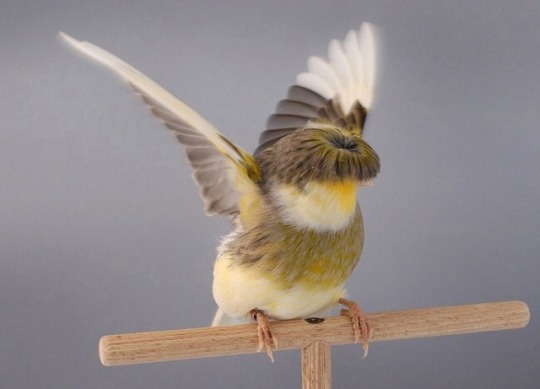
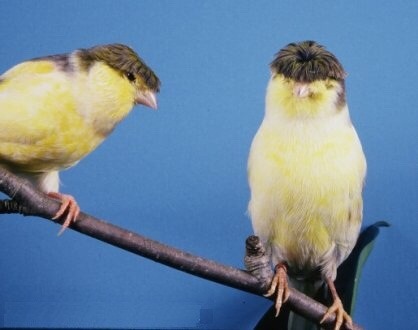
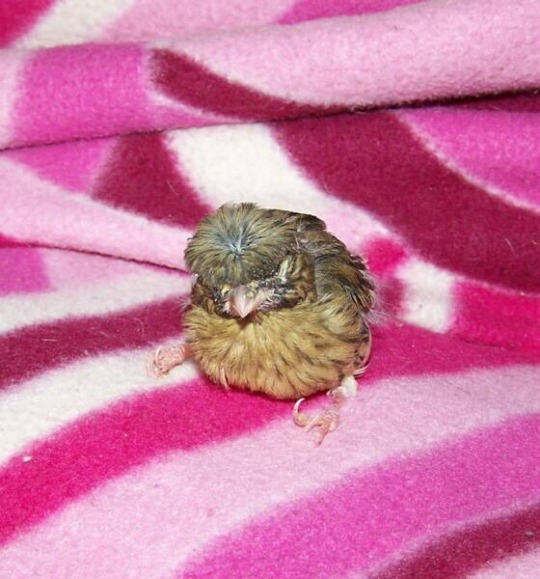
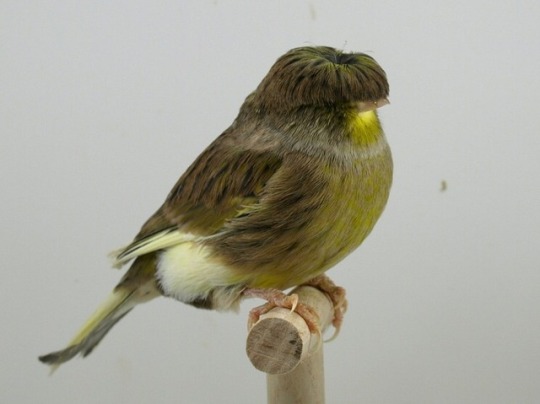
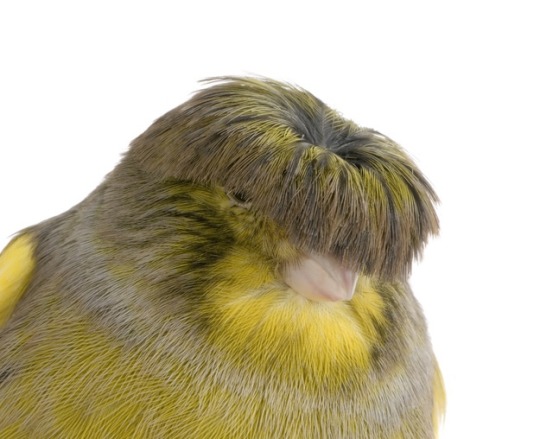
the gloster canary is a small breed of fancy canary, measuring only 4 ½ inches in length, known for its distinctive crest. the gloster canary is descended from years of captive breeding, and though it was bred for appearance, has kept a beautiful song.

gloster canaries are most well known for their “beatles haircuts”. ‘corona’ gloster canaries are canaries that display this trait, and ‘consort’ canaries are gloster canaries without the crest. if two coronas are bred together, the resulting babies are likely to have deformities. breeding two consorts together will result in only consort offspring, but no health problems.

the gloster canary comes in all kinds of color mutations, except for red factor. the most common are green, yellow, and cinnamon.

gloster canaries, when bred properly, don’t suffer from health issues any more than other canary breeds, though they are more likely to have feather lumps, which is an ingrown feather. while canary care is often overlooked, the gloster’s canary should not have a barren cage, and needs mental stimulation in the form of interaction and toys.

gloster’s canaries are funky little dudes with cheerful personalities and amazing style. these little guys are a delight, and while they are sometimes overlooked for more ‘showy’ birds, they have a lot to offer!

image sources: (x)

bird of the day: the java sparrow

the java sparrow is a small passerine bird native to parts of indonesia (though it has established feral colonies in other places). the java sparrow is also known as the java finch and the java rice-eating bird.

like the name rice-eating bird may imply, in some places the java sparrow has become an agricultural pest. naturally, the sparrow feeds off of grains and seeds, but they have been known to feed extensively in rice paddies. this has led to regulations on the sparrow, particularly in the us. in the state of california, it is illegal altogether to own a java sparrow.

despite this, the java sparrow remains a popular, well-loved pet. records of this bird in captivity date back to ming dynasty china. the java sparrow has remained a common pet in much of the world. it’s popularity in the us declined after laws were put in place banning import of wild birds. however, it is still well-known and well-loved. the java sparrow is known in captivity for its friendliness, ability to be a part of a mixed-species aviary, and relatively low maintainence.

in the wild, java sparrows live in large flocks. males and females are almost impossible for humans to tell apart, as they share the same plumage. however, the male performs a song and dance the female does not. java sparrows nest in trees, or buildings if given the opportunity, and raise 3-8 eggs.

unfortunately, recently the java sparrow has faced a decline in numbers. habitat loss and hunting have caused the java sparrow’s decline. they are now listed as vulnerable by the iucn. hopefully, this trend reverses and they become as common in the wild as they are in our households.

image sources: (x)

should parrots be kept as pets?

i’ve seen a lot of posts debating whether or not it’s ethical to own parrots, and i just thought I’d put in my own two cents.

if you asked most (reasonable) people who loved tigers if they’d keep them as a pet if they knew they wouldn’t be able to hurt them, you’d likely get a resounding no. why? there’s plenty more reasons besides their strength. tigers need miles and miles of space. they have food requirements that are hard to meet. they need to climb and explore and play. they need to be able to hunt, and use their natural instincts.

if you asked people who loved parrots, most wouldn’t hesitate to say they’d like them as a pet – despite having very complicated needs as well.

we underestimate parrots because we view them as ‘controllable’. they don’t pose a significant risk to us, so we don’t have the same fear of them we do of big cats or other animals we deem ‘exotic’. if it can’t kill us, it’s okay to put in a cage.

(most) parrots naturally fly miles every day. even the biggest, most enriched outdoor aviary is nothing in comparison to what these birds would naturally have. most caretakers also don’t have the resources for these kind of things (i know i could only dream of having something like that for my parrots).

no matter what research you do on your bird’s diet, you probably can’t provide for them what they’d eat in the wild. fruits and veggies are good, but likely not close to what they’d eat in the wild. even when we provide them with seed mixes, they’re a totally different composition of seed than their natural diet.

we can never provide parrots what they should have. ultimately, we should have never taken parrots from the wild. the English budgie is the only truly ‘domestic’ parrot. the rest are essentially birds that have kept their wild nature, but having been kept as pets, can never be ‘returned’ to the wild.

this doesn’t mean don’t adopt a parrot. at all. i think adopting a rescue parrot is a great thing to do. can you give a parrot what they should have? no. but you can strive to do the best for them, and you can give them so much more than they’d have waiting to be adopted at a rescue. there’s nothing wrong with birds adopted from breeders in themselves, and plenty of bird breeders are compassionate people who love birds, but i’d hope you would at least look at some adoptable rescue birds or birds that need to be rehomed before purchasing one.