
golden conures are a medium-sized parrot native to south america. most yellow parrots are the result of color mutations, but golden conures’ coloration is natural. the golden conure is threatened by habitat loss and poaching for the pet trade.
(x)
golden conures are a medium-sized parrot native to south america. most yellow parrots are the result of color mutations, but golden conures’ coloration is natural. the golden conure is threatened by habitat loss and poaching for the pet trade.
(x)


a feral quaker parrot, naturally found in south america, tries a taste of sunflower. quaker parrots have established themselves throughout the world due to escapes and intentional releases from the pet trade, and some flocks number in the thousands.
(x)
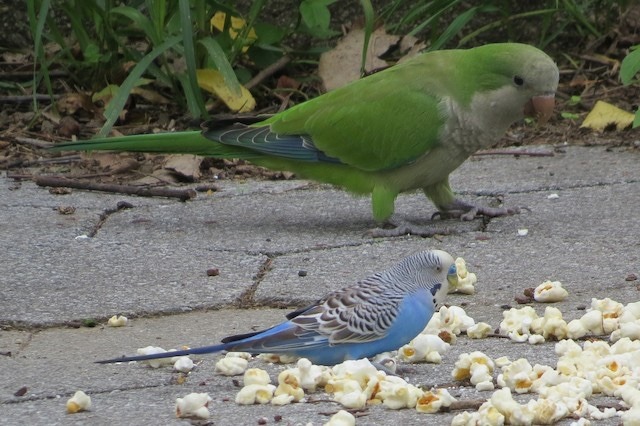
a feral budgerigar and quaker parrot feed alongside each other on spilled popcorn. through budgerigars are native to australia and quaker parrots are native to south america, both parrots have established feral populations in the united states, and surprise some by being commonly found in urban environments.
(x)

todays bird is: jaan the budgie!

todays bird is: these budgies!

the quaker parrot, also known as the monk parakeet, is a medium-sized green and off-white parrot native to south america.
quaker parrots are well known for their unusual nest-building habits. they are one of the few species of birds to be resident in their nests throughout the year, not just during breeding season. quaker parrots create huge, communal nests out of twigs – sometimes as big as a small automobile. each parrot pair has an ‘apartment’ within the nest, and an entire flock shares the communal nest.


quaker parrots feed off of fruits, berries, seeds, and nuts.

quaker parrots are well-loved as pets. despite being loud and territorial, they can also be devoted companions with large vocabularies. however – it isn’t legal to own quaker parrots everywhere, as they can easily become invasive if introduced into the wild.

large flocks of feral quaker parrots, sometimes numbering in the thousands, exist throughout the world. it’s hard to tell exactly how they got there – many of the original birds may be escaped pets, or intentional releases, that then bred and created many more birds. some consider them pests, as they feed off of fruit and grain crops and can be noisy, and others love them. they can create problems when they build their large communal nests on telephone poles – sometimes causing fires. however, some celebrate them – they have become the mascot for a college in new york, as large flocks of them nest on campus.

quaker parrots are very abundant and are currently rated least concern by the iucn.
(x)

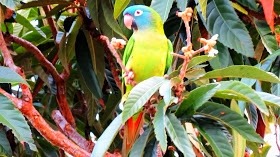
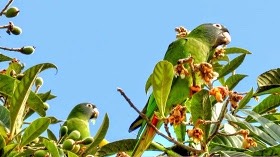
though they are native to south america, blue crowned conures have established a feral population in central florida. most escaped pet birds can’t establish breeding populations due to weather and food shortages, but florida is (an unnatural) home to several species of parrot.
(x)


a blue-crowned conure dines at a birdfeeder. naturally, conures forage for fruits, berries, and native seeds, but they can become regular visitors to backyard bird feeders.
(x)


a feral blue-crowned conure in gulfport, florida sits alongside more typical backyard birds at a feeding station.
(x)


two wild painted conures forage for fruit. painted conures are rare in the pet trade, which may be a good thing – they are still common in their native habitat in south america.
(x)
 today's bird