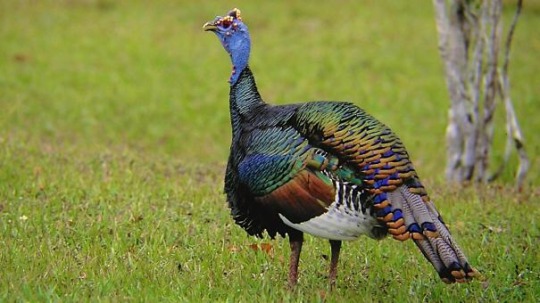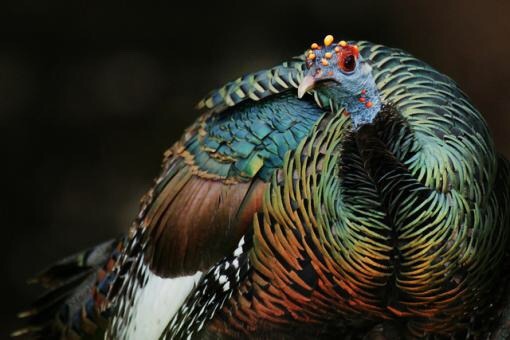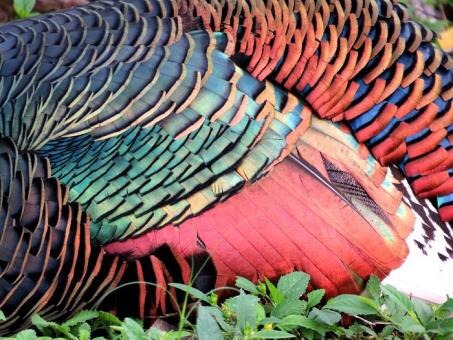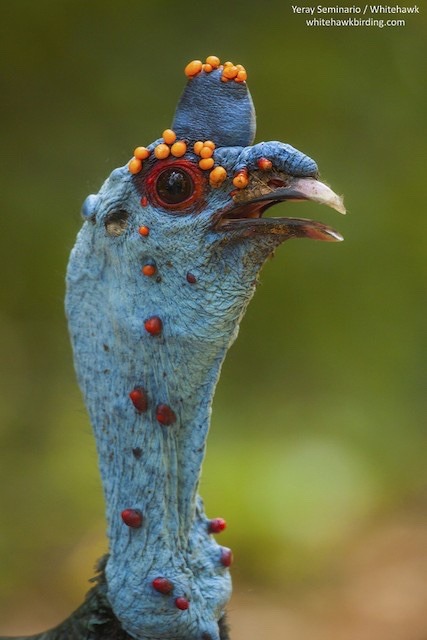
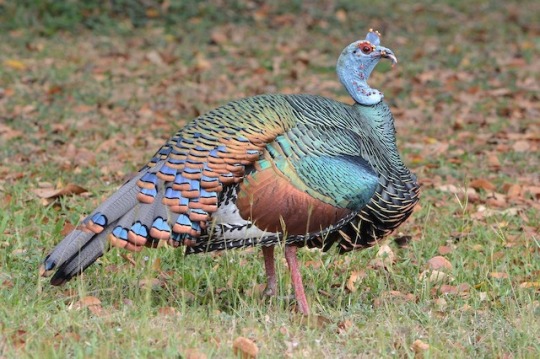
though they are the closest relative of the north american wild turkey, the ocellated turkey looks wildly different in appearance, and while still being a large bird, is much smaller. this turkey is found only in a small range of mexico and an even tinier portion of south america. both males and females have a distinctive blue head and bright feathers with a metallic sheen. ocellated turkeys feed off of fruits, plant matter, and insects, and forage on the ground in flocks. at night they roost in trees to avoid predators such as jaguars, but spend the majority of their time on the ground.

(x)

the bananaquit is a small bird native to mexico and south america. researchers aren’t exactly sure what family the bananaquit is a part of; for now, they have tentatively been placed with tanagers. bananaquits feed mainly off of nectar, as well as fruit and small insects.

(x)

turkeys are often regarded as dull, but that definitely isn’t the case with the ocellated turkey. these birds are native to a small range in mexico and south america. they are smaller than north american wild turkeys, but they have much more vibrant plumage. both males and females have iridescent colorful plumage, though females can be slightly more brown.

(x)

bird of the day: half-moon conure

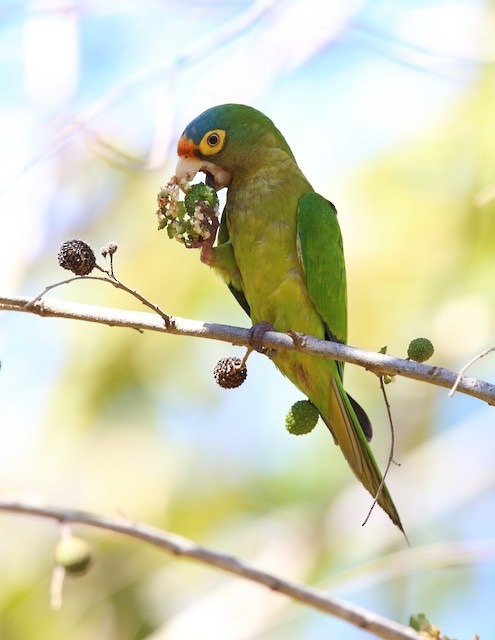
the half-moon conure, also known as the orange-fronted parakeet, is a medium-sized parrot that is found from mexico to costa rica.

the half-moon conure feeds on various flowers, buds, seeds, vegetation, and fruit. a known favorite of this bird is figs.

outside of the breeding season, half-moon conures live in large flocks, sometimes of over a hundred birds.

this bird has unusual nesting habits. both the male and female work tirelessly to hollow out a termite nest. once the termites create a ‘seal’ around the damage, they use the hollow within the nest to raise their young. they also occasionally use empty woodpecker hollows.

the half-moon conure has also established a breeding population in california. normally, feral parrots cannot sustain a population for a long period of time, but this flock has been recorded since 1998.

this conure is rated ‘least concern’ by the iucn, but they have suffered population declines due to trapping for the pet trade.

image sources: (x)