if you have never had a large parrot and want one, please watch some of these videos first
how loud is a moluccan cockatoo?
cockatoo bite (warning: blood)
if you have never had a large parrot and want one, please watch some of these videos first
how loud is a moluccan cockatoo?
cockatoo bite (warning: blood)
i’ve seen a lot of posts debating whether or not it’s ethical to own parrots, and i just thought I’d put in my own two cents.
if you asked most (reasonable) people who loved tigers if they’d keep them as a pet if they knew they wouldn’t be able to hurt them, you’d likely get a resounding no. why? there’s plenty more reasons besides their strength. tigers need miles and miles of space. they have food requirements that are hard to meet. they need to climb and explore and play. they need to be able to hunt, and use their natural instincts.
if you asked people who loved parrots, most wouldn’t hesitate to say they’d like them as a pet – despite having very complicated needs as well.
we underestimate parrots because we view them as ‘controllable’. they don’t pose a significant risk to us, so we don’t have the same fear of them we do of big cats or other animals we deem ‘exotic’. if it can’t kill us, it’s okay to put in a cage.
(most) parrots naturally fly miles every day. even the biggest, most enriched outdoor aviary is nothing in comparison to what these birds would naturally have. most caretakers also don’t have the resources for these kind of things (i know i could only dream of having something like that for my parrots).
no matter what research you do on your bird’s diet, you probably can’t provide for them what they’d eat in the wild. fruits and veggies are good, but likely not close to what they’d eat in the wild. even when we provide them with seed mixes, they’re a totally different composition of seed than their natural diet.
we can never provide parrots what they should have. ultimately, we should have never taken parrots from the wild. the English budgie is the only truly ‘domestic’ parrot. the rest are essentially birds that have kept their wild nature, but having been kept as pets, can never be ‘returned’ to the wild.
this doesn’t mean don’t adopt a parrot. at all. i think adopting a rescue parrot is a great thing to do. can you give a parrot what they should have? no. but you can strive to do the best for them, and you can give them so much more than they’d have waiting to be adopted at a rescue. there’s nothing wrong with birds adopted from breeders in themselves, and plenty of bird breeders are compassionate people who love birds, but i’d hope you would at least look at some adoptable rescue birds or birds that need to be rehomed before purchasing one.

the blue-throated macaw is a large macaw (with a wingspan of three feet!) that lives in a small area of bolivia. commonly mistaken for the blue-and-gold macaw, they are distinguishable by their blue, not black throat, brighter cyan body, and lack of green on the forehead.

once thought to be extinct in the wild, blue-throated macaws are critically endangered, with only 300-400 remaining in the wild. this is mainly due to capture for the pet trade.
blue-throated macaws can be distinguished as individuals by the feather ‘stripes’ on their otherwise bare facial patches. each is unique, much like a human fingerprint. these birds are often found in pairs, though small flocks aren’t uncommon.
luckily, the blue-throated macaw’s numbers are rising with focused conservation efforts. let’s hope this trend continues!


the glaucous macaw is a beautiful large macaw with a striking appearance. they may appear similar to the more familiar hyacinth macaw at first glance, but they have a lighter teal color on their body, as well as some violet hues on the wings. the glaucous macaw is somewhat closely related to the hyacinth macaw, though they are closest to the lear’s macaw.
unfortunately, it’s possible the glaucous macaw is no longer alive. widely believed to be extinct, they have not been seen alive since the 1960s. while rumors persist that there are wild birds still out there, none have proved credible or have come with photographic evidence, and expeditions to the macaws’ native range haven’t turned up any survivors. it’s believed they declined due to the widespread destruction of their habitat and main food source, the yatay palm.


(image source: x)

todays bird is this adorable baby catalina macaw!


todays bird is: this blue and gold macaw at the chaffee zoo!


todays bird is: jerry the blue and gold macaw! [thank you to Cygnus875 for your submission!]
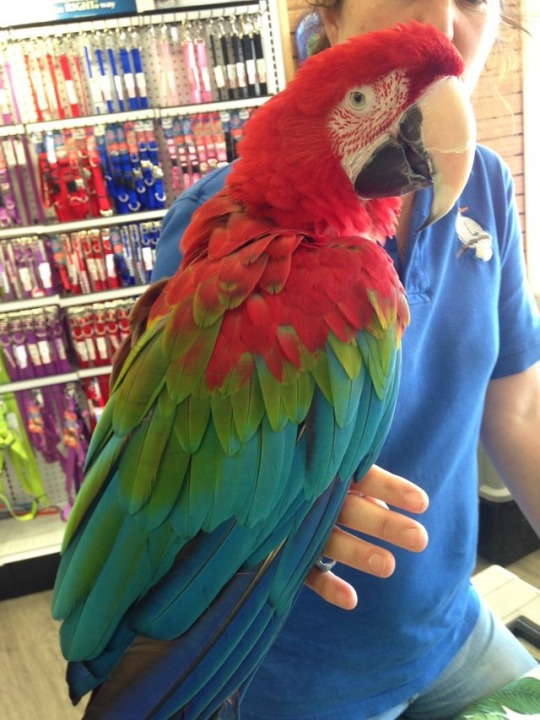
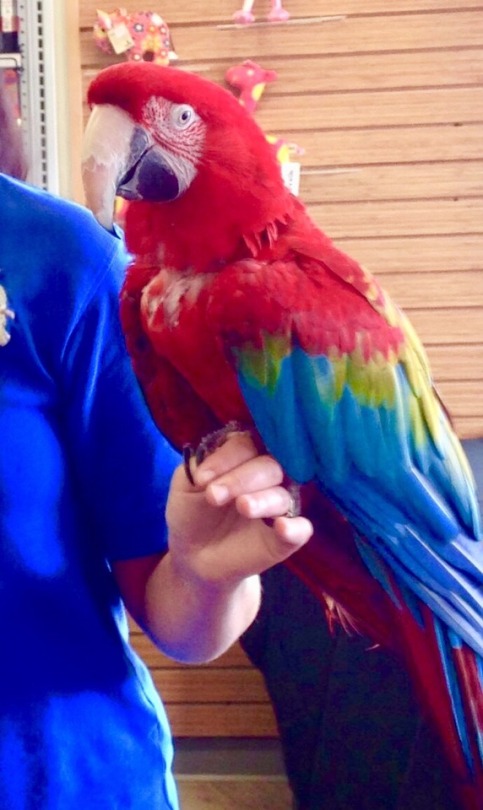
today’s bird is: oliver the green-winged macaw! [thank you to Sadestar on Deviantart for your submission!]
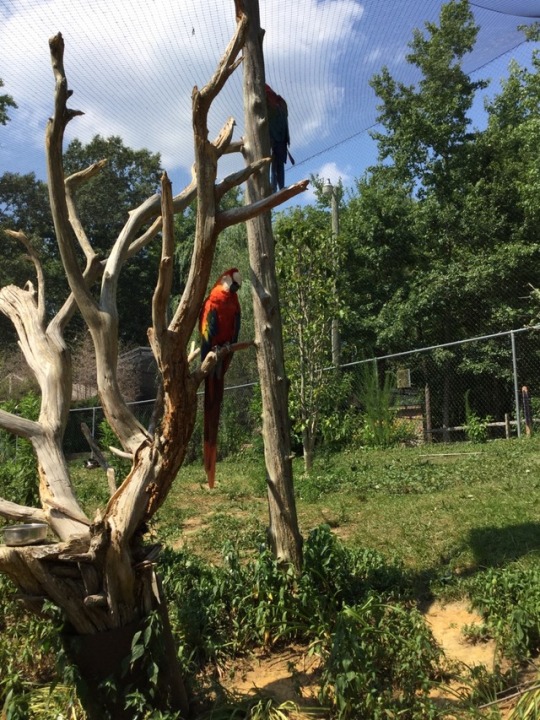
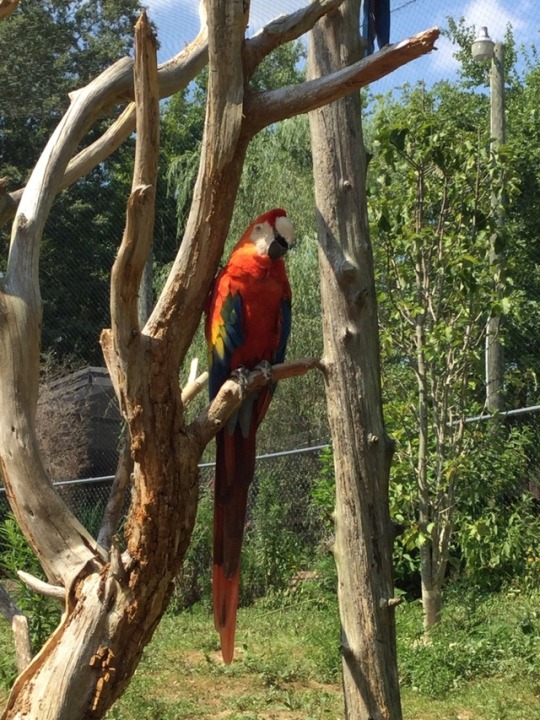
today’s bird of the day is: this scarlet macaw! (seen at sylvan heights waterfowl center)
 today's bird