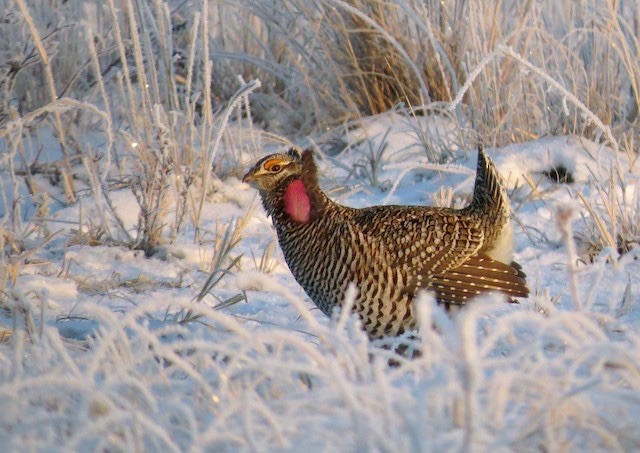
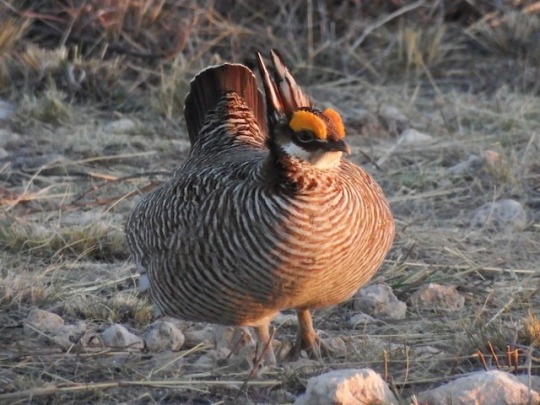
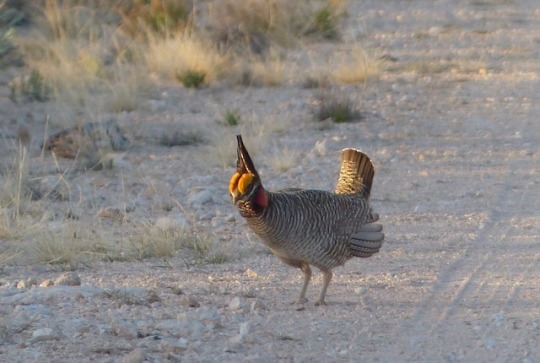
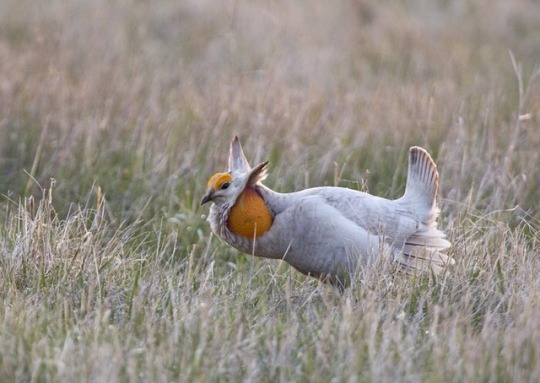
the western capercaillie is the largest member of the grouse family, and is found throughout europe and asia. capercaillies show extreme sexual dimorphism – while males and females can be differentiated by color, the male is also two times the size of the female. capercaillies feed on leaves, buds, berries, seeds, and insects, foraging on the ground.

(x)

the willow ptarmigan is a member of the grouse family found in europe, canada, and alaska. willow ptarmigans are named due to their preference for living in forests of willow trees; the buds of the willow trees form a large part of their diet, particularly in winter. ptarmigans shape and ‘landscape’ shrubs by eating all the buds on the lower branches within their reach. in the warmer months, ptarmigans are brown and white, and during the winter they molt to completely white plumage. males and females can be distinguished by the red wattles above the eyes, which only the males have.

(x)

the rock ptarmigan is a medium-sized grouse species found in northern europe and canada. the ptarmigan has brown plumage in the summer to blend in with their rocky habitat, but in winter molts to all-white plumage to camouflage themselves in the snow. the rock ptarmigan’s preferred food is willow buds, but they readily eat other vegetation, seeds, and insects.

(x)