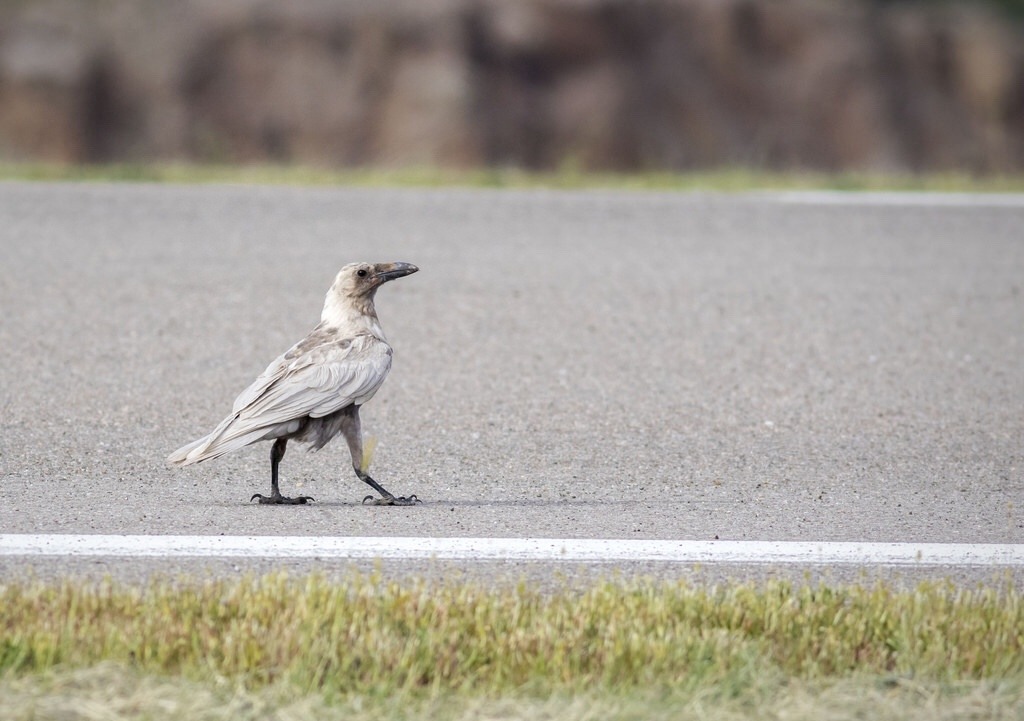
a leucistic common raven going for a stroll. while usually leucism (a reduction in pigmentation) presents as a few white feathers in ravens and crows, they can also be overall paler like this bird.
(x)
a leucistic common raven going for a stroll. while usually leucism (a reduction in pigmentation) presents as a few white feathers in ravens and crows, they can also be overall paler like this bird.
(x)
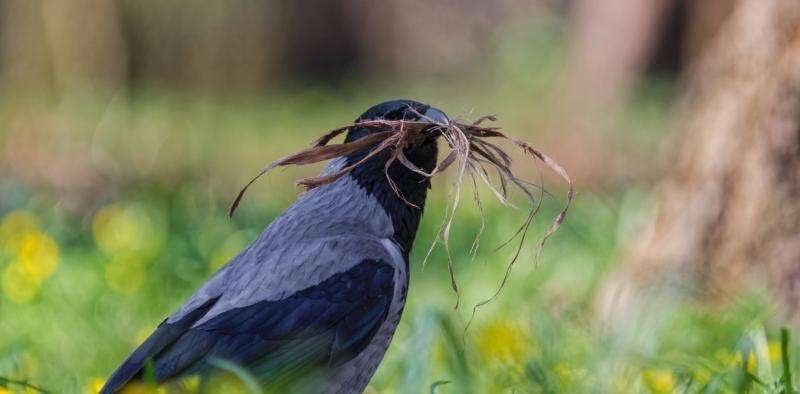
researchers found that ravens are capable of planning for the future. while they exhibit some of this behavior in the wild, such as storing food, more complex examples were found during testing. ravens were able to store a tool for accessing food and retrieve it later when presented with opportunity to use it, and also understood the value of saving a token that could be exchanged at a later time for food.
(x)
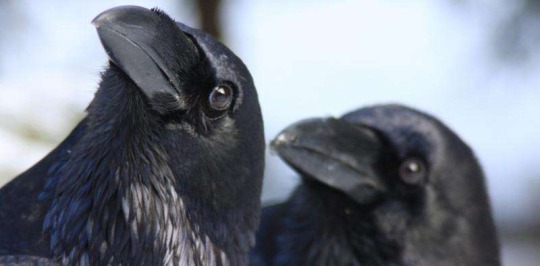
crows and ravens have demostrated a knowledge of ‘fairness’ – and demand equal treatment. researchers did an ‘inequity test’ on the birds. some birds received cheese, a high value treat, and others received a piece of grape, which was not desirable. those who received the grape started refusing to accept it. the researchers then performed an ‘effort control’ test. some birds were given a piece of cheese with nothing required of them. other birds could choose from cheese or a grape – but had to exchange a token for them. again, the birds that were being treated unfairly refused to cooperate.
(x)
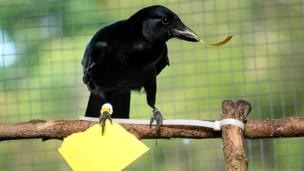
researchers created a small ‘vending machine’ for crows, accompanied with small slips of paper that could be used to operate the machine. the crows quickly figured out how to use the machine. next, the crows were given papers that were the incorrect size. the crows fashioned them into the right size for the machine. it was predicted this would happen – in the wild, crows have been observed on many occasions using tools they fashion themselves to get what they want.
(x)

a eurasian jackdaw hitches a ride on a domestic sheep. this behavior is common in jackdaws – they frequently either remove ticks from the sheep to eat, or take strands of wool for their nests.
(x)
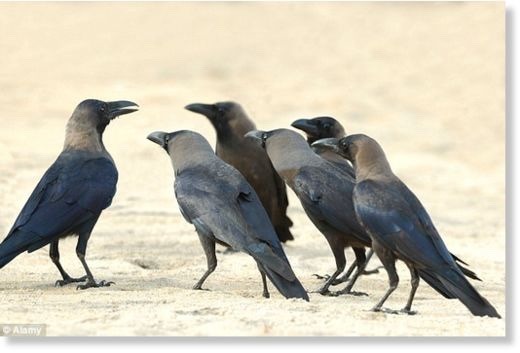
crows have been documented holding ‘funerals’ for many years. however, researchers suggest that they may not be mourning; evidence indicates that crows may be examining the body & surrounding area for potential threats to the rest of the flock.
source: (x)

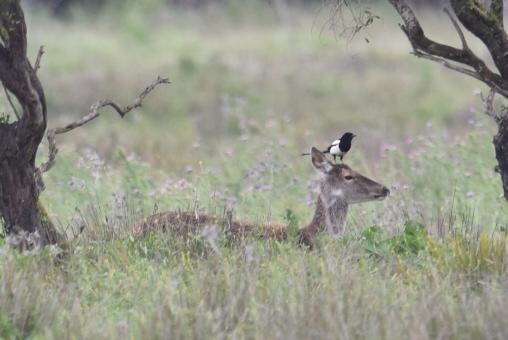
the eurasian magpie is a member of the corvid family, with a large range and familiarity with people in urban environments.
eurasian magpies are highly regarded for their intelligence. magpies have been observed using tools, caching food and remembering its location months later, and recognizing themselves in mirrors. their intelligence has been compared to that of great apes.

some view the magpie’s coloring as bland; as from some angles, it is only black and white, which some find uninteresting. however, in the right light, large patches of the bird’s body are iridescent and appear shades of metallic blues and greens.


magpies were originally known only as ‘pies’, thought to be derived from ‘pied’ in reference to the bird’s markings. ‘mag’ was tacked on in the 16th century as a short version of ‘margaret’, which was not only a name but used to refer to women in general; it was used as a derogatory reference to ‘women’s chatter’. ironically, magpies have fantastic mimicry ability, and have extensive ‘vocabularies’ – they can mimic dogs, birds of prey, wildlife, and even human speech.

magpies feed off of insects, small animals & birds (as well as their eggs), fruit, plant matter, and acorns. in urban areas they sometimes scavenge for human leftovers. some believe magpies decimate local bird populations, but no scientific proof has been found indicating magpies are a major threat to other birds.

magpies are intensely protective of their nestlings, which has sometimes led to them being branded as aggressive or mean. magpie offspring are poor fliers even after leaving the nest, and their parents have good reason to worry; researchers found only 22% of young magpies make it to their first birthday.


eurasian magpies are currently rated least concern by the iucn. they have managed to hang on well even with increasing development; hopefully these smart birds continue to adapt and survive.
source: (x)

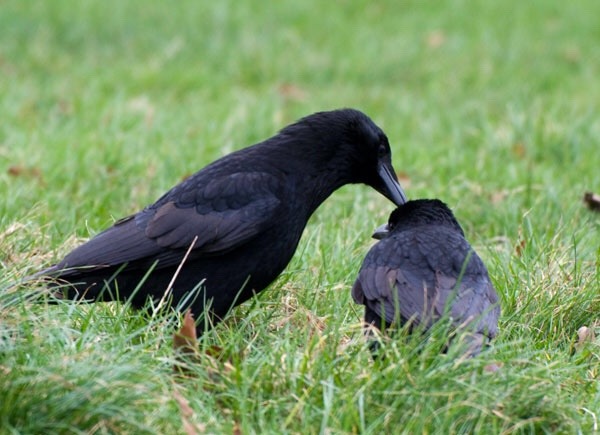
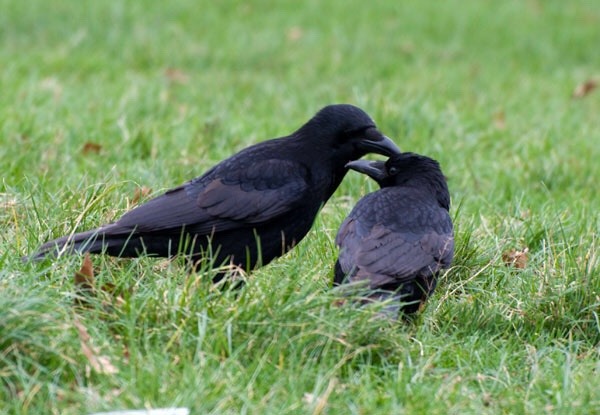
a crow preens another (presumably its mate). while crows have a reputation as foreboding and unloving, they are very devoted to their mates and flock members and frequently engage in displays of affection like this.
source: (x)
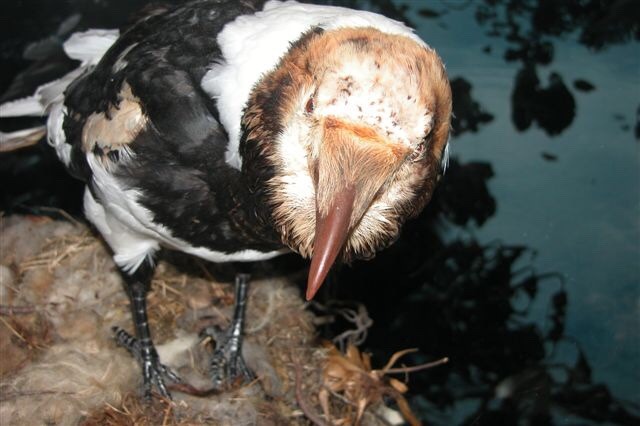
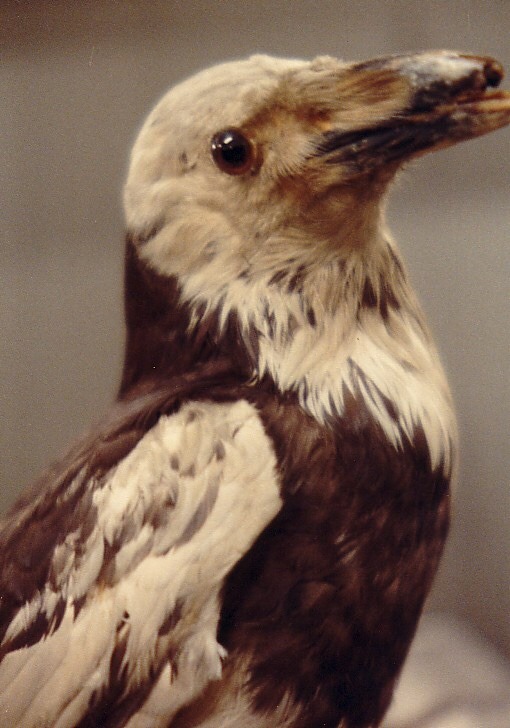
pied faroe ravens were a common color morph of ravens found on the faroe islands, sometimes considered a seperate subspecies. while it isn’t entirely uncommon for crowd and ravens to have patches of white on occasion, these birds’ coloring was very distinct. these unique birds were hunted to extinction, and now only occasional natural mutations are seen on the island.
source: (x)
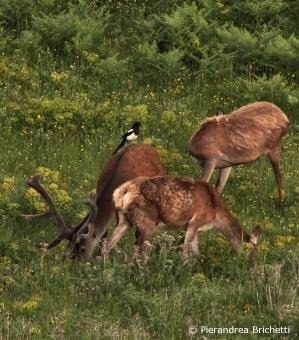
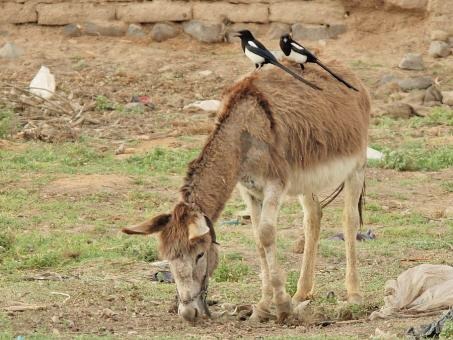
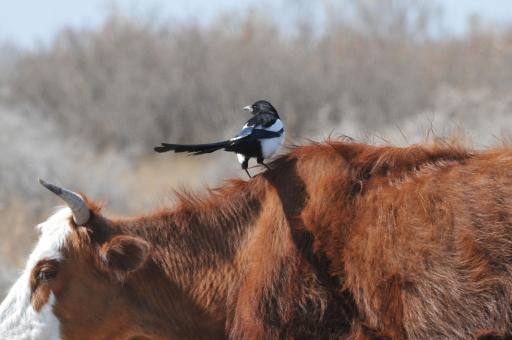
 today's bird