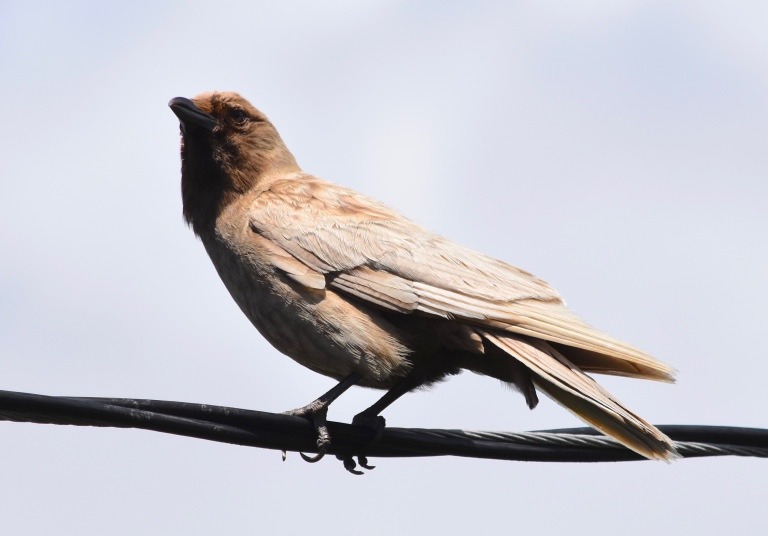
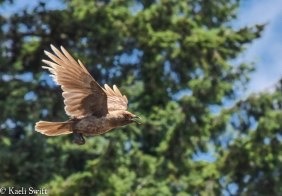
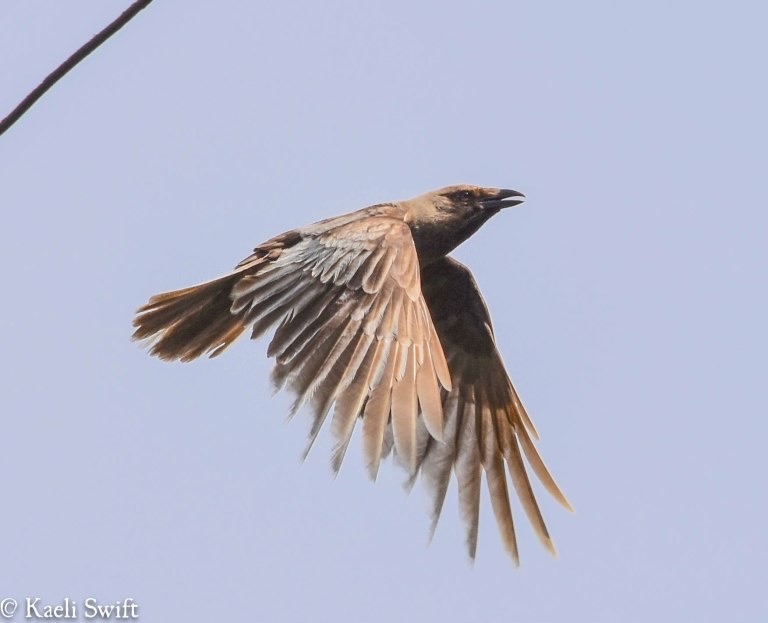
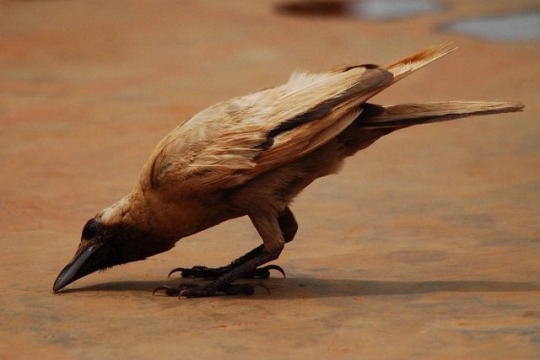
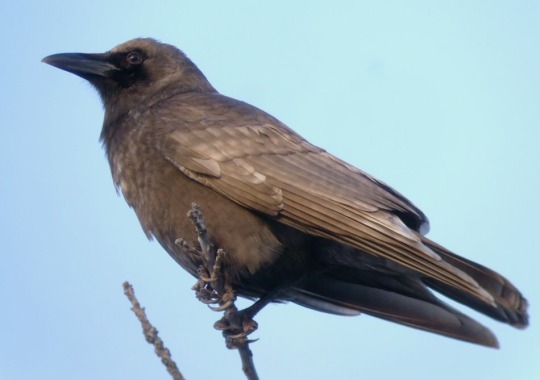
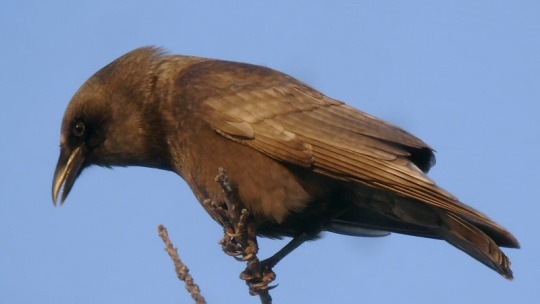
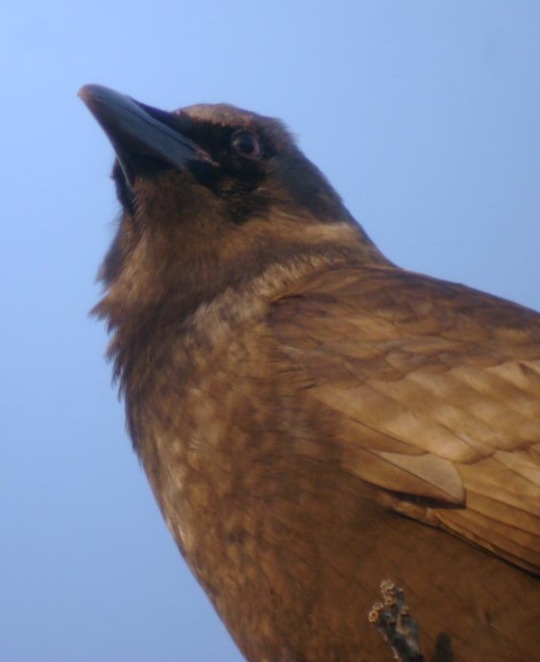
this unusually brown crow is what is sometimes referred to as a “caramel” crow. it’s not certain what the cause of the abnormal plumage is, as none of these crows have ever been examined by researchers; however, plausible theories include crows affected by leucism (a lack of pigment) or crows with a rare ‘brown’ color mutation.
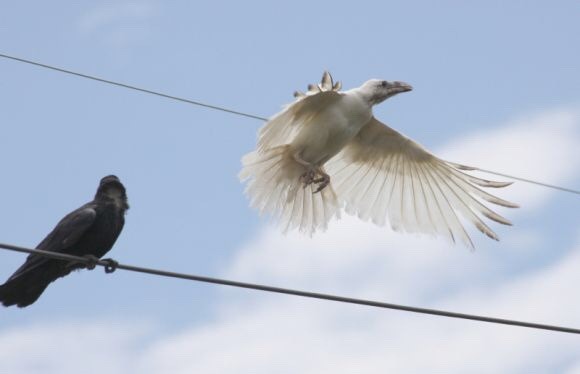
this white large-billed crow was spotted in shimane, japan. crows with such drastic variations in color aren’t entirely uncommon, and have been seen not only in japan but in different crow species all over the world. it’s likely this bird’s color results from leucism, a genetic mutation that causes a decrease in melanin and other pigments.
this house crow is unusually caramel colored. this mutation has been seen in other crows, and it’s of some dispute of what the cause is; many agree it is leucism, a lack of pigmentation, while others believe it is a seperate color mutation unique to crows.
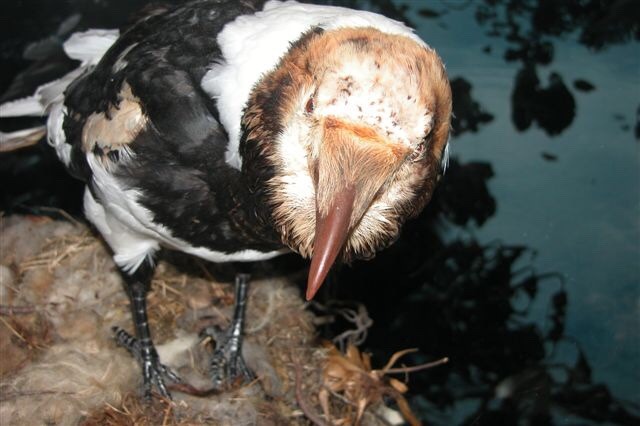
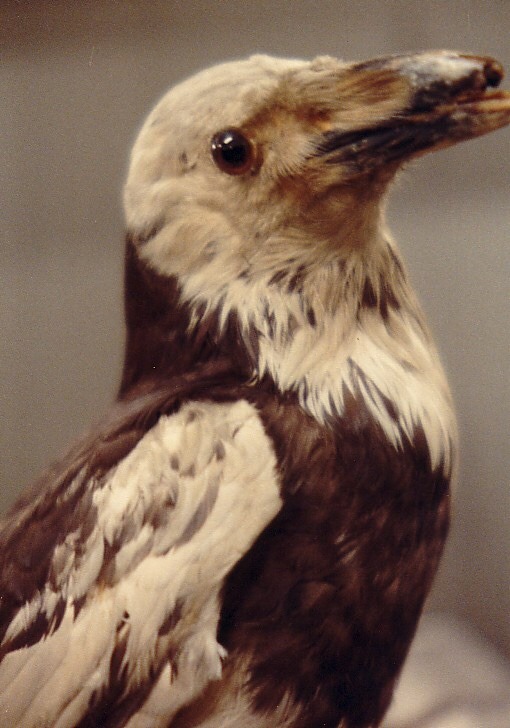
pied faroe ravens were a common color morph of ravens found on the faroe islands, sometimes considered a seperate subspecies. while it isn’t entirely uncommon for crowd and ravens to have patches of white on occasion, these birds’ coloring was very distinct. these unique birds were hunted to extinction, and now only occasional natural mutations are seen on the island.
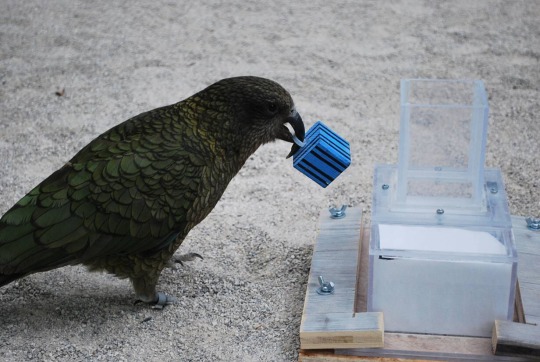
researchers have found that parrots and crows learn through play, much like human babies. both birds understood objects & how to use them better after being given time to explore and play with the objects.
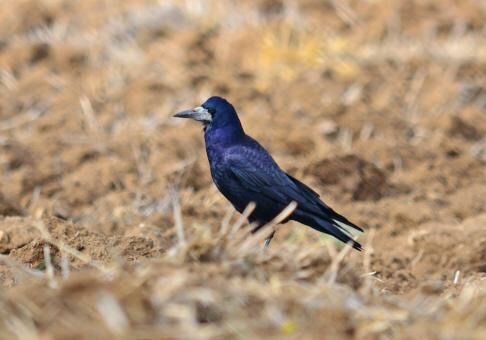
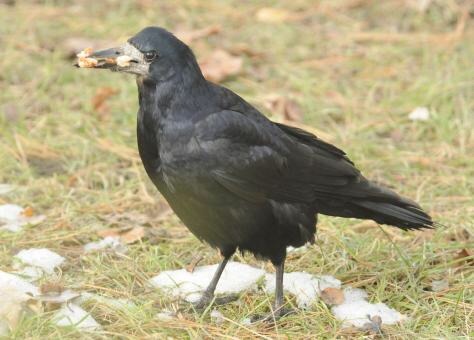
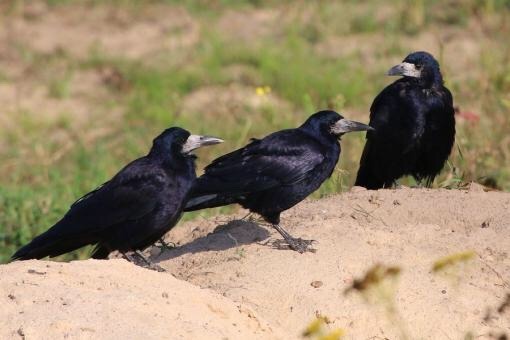
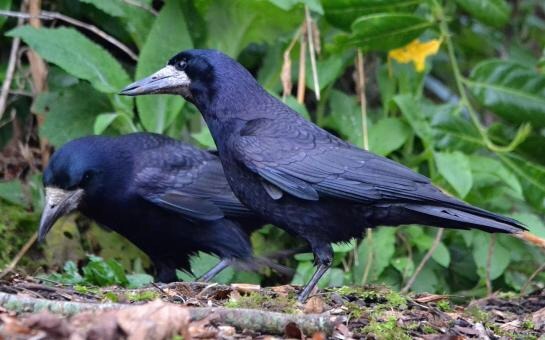
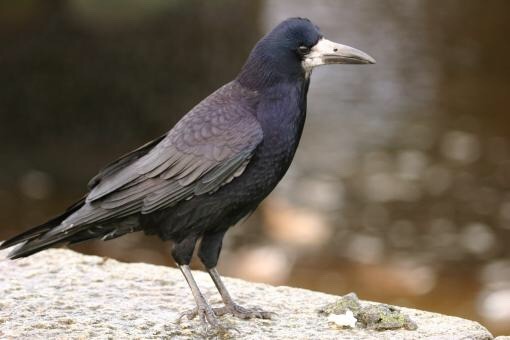
the rook is a bird belonging to the corvidae family that is native to europe, asia, and has an introduced presence in new zealand.
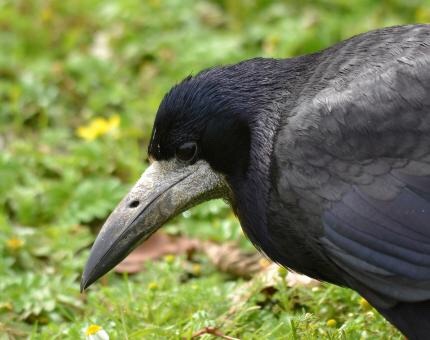
the rook is a medium-sized brownish-black bird with glossy feathers that are iridescent and turn purple and green in the right lighting. the rook is easily distinguished from other crows by their bare face, making them look almost as if their skull is exposed. the rook also has very fluffy feathering around the legs.
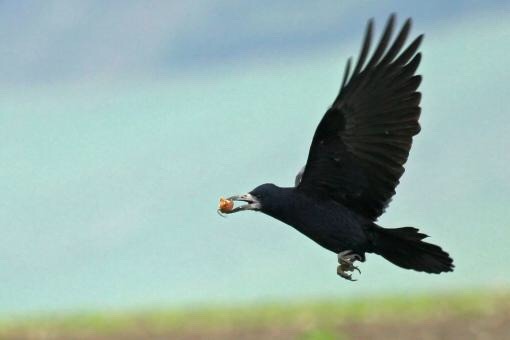
rooks are omnivorous, and feed off of insects, earthworms, grain, fruit, small animals, eggs, acorns, and crustaceans. they are opportunistic and in urban environments will seek out human scraps.
rooks are highly social birds that form massive flocks that roost together in the evenings. these flocks are sometimes viewed as disturbances.
rooks are monogamous, and are highly devoted to their mates, having long-term pair bonds.
the rook is rated least concern by the iucn due to its high population numbers and the large amount of land the species inhabits.
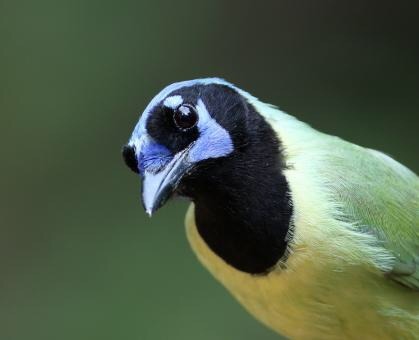
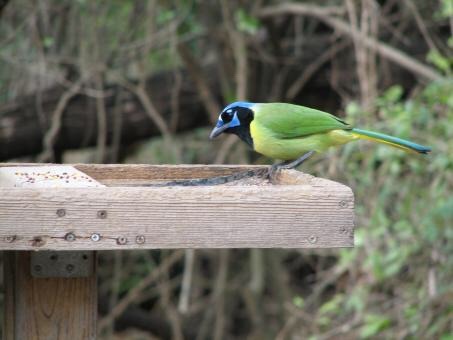
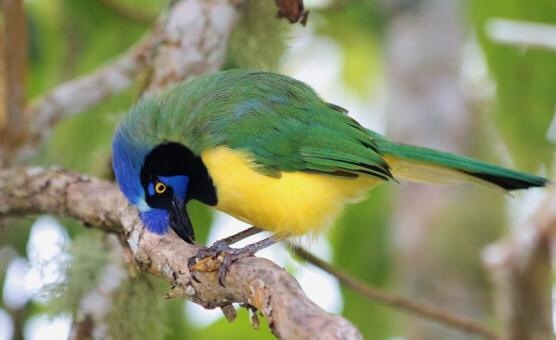
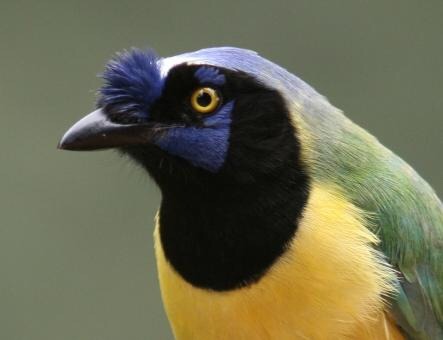
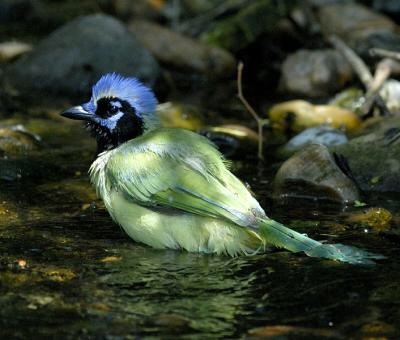
the green jay is a medium-sized corvid native throughout central america – they are found from southern texas to the honduras.
the green jay has a varied diet. they eat insects, seeds, fruits and berries, and on occasion very small mammals. they have been observed using sticks as tools to get their food.
males and females in this species have the same external appearance. however, the amount of blue on the bird’s head can vary slightly according to its location.
the green jay is currently rated as least concern by the iucn, as despite development in its territory it is thriving.
this unusual bird is the result of natural hybridization between a blue jay and a steller’s jay. while uncommon, they aren’t unheard of, and it’s likely some go unnoticed, as they can pass for a regular jay with slightly off coloration.
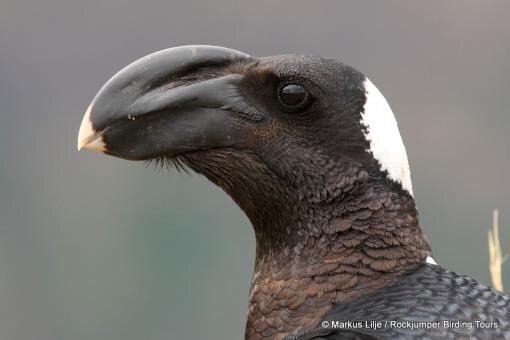
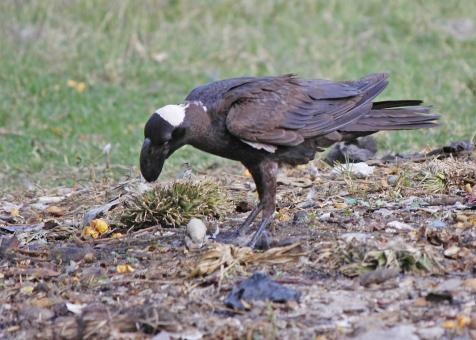
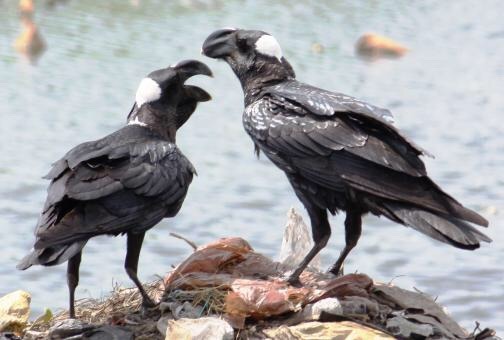
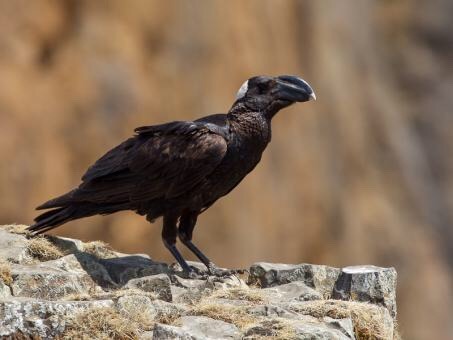
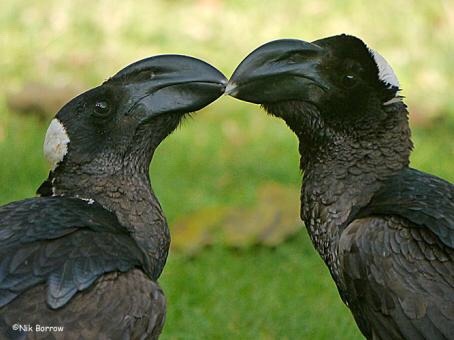
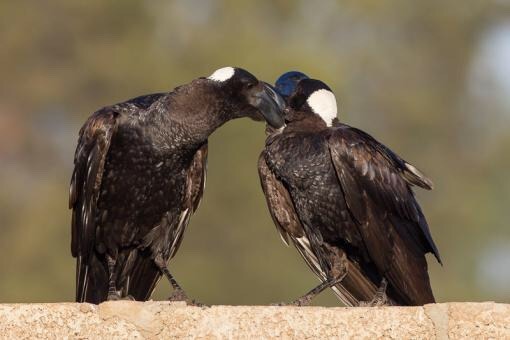
the thick-billed raven is a large bird native to africa (mainly Ethiopia), distinguished by its distinct curved and thick beak.
the thick-billed raven is the largest of the corvid family. they feed off of grubs, insects, small reptiles, carrion, and human scraps when available.
the thick-billed raven has participated in intelligence tests in captivity, and like other ravens, is considerably smart and adept at solving puzzles. they are also capable of mimicking sound and human voices, though this has only been seen in captivity.


 today's bird