

a father northern cardinal feeding his young. even after baby cardinals leave the nest, they continue to need help, and both parents care for them for a brief amount of time.
source: (x)
a father northern cardinal feeding his young. even after baby cardinals leave the nest, they continue to need help, and both parents care for them for a brief amount of time.
source: (x)


this northern cardinal with a bald head may look unusual, but it doesn’t have a serious condition or rare mutation. sometimes, birds lose all the feathers on their heads first during a molt; skin mites are another possible cause.
(x)

a male northern cardinal feeds his mate. cardinals are often regarded as ‘romantic’; they are devoted to their mate, and sing to and feed each other.
source: (x)


from left to right: northern cardinal, desert cardinal, vermilion cardinal



1. cardinal pair without any mutations
2. pied female cardinal (results from partial leucism)
4. ‘pink’ male cardinal – leucism can either make a bird pied, or overall paler

the varied bunting is a small member of the cardinal family native to new mexico, arizona, texas, and mexico.
varied buntings are well known for their vibrant purple and red plumage. only male buntings are this colorful; females are easy to tell apart from males, as like many other bunting females, they are a plain brown.


these buntings eat mainly fruit, insects, and seed, and generally forage on the ground for their food. they occasionally can be tempted to birdfeeders with birdseed or fruit.


varied buntings create ‘open-cup’ nests out of grass and spiderwebs, usually hidden within thorny shrubs to protect the young. the female typically lays two to five eggs, which are incubated for fourteen days. the young fledge at only ten days old. varied buntings usually choose dry habitats, and will seek out nesting spots near water sources.


the varied bunting is currently rated ‘least concern’ by the iucn, though unfortunately, its population is declining.
image source: (x)


today’s bird is this northern cardinal! [thank you to @lysa44 for your submission!]
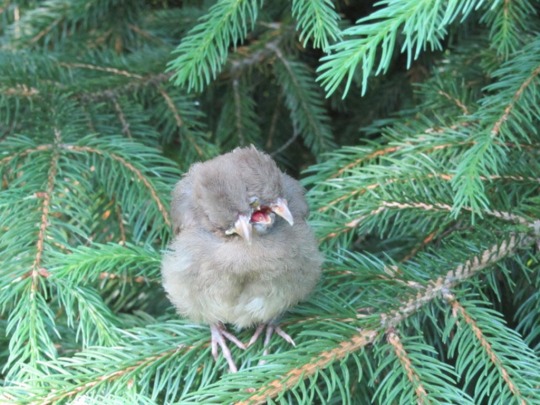
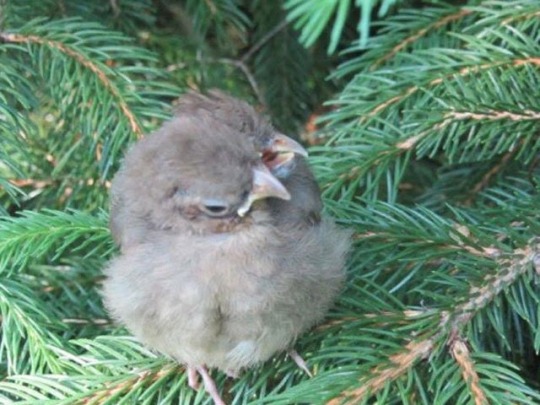
this little northern cardinal was discovered in massachusetts with two heads and three beaks.
source: (x)


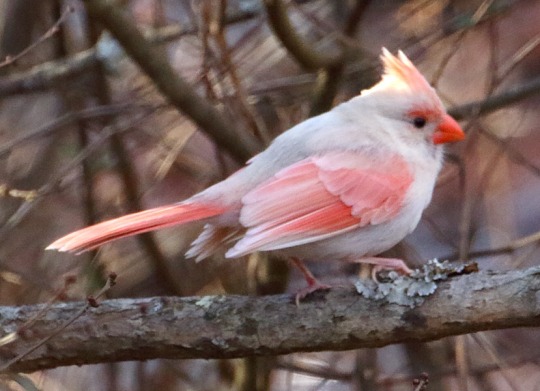
this northern cardinal was spotted in virginia, and has a condition called leucism. leucism is a reduction of pigments, leading to drastically different appearances from ‘normal’ specimens.
source: (x)
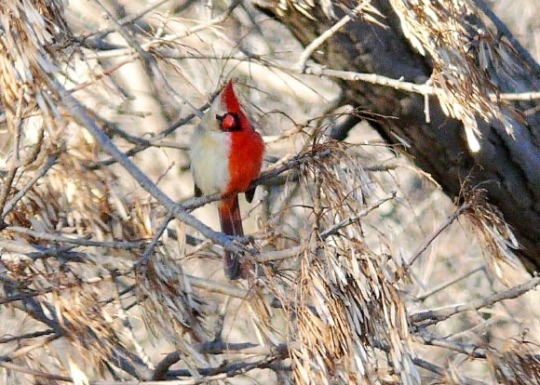
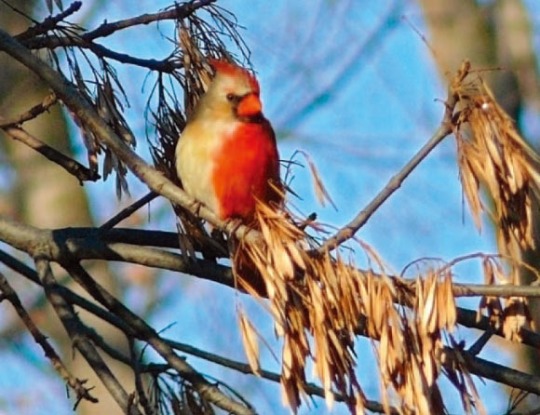
this is a northern cardinal displaying bilateral gynandromorphism – the left side of the bird’s body is male, and the right side is female. unlike intersex individuals, the bird is entirely ‘split’ between male and female. likely due to its strange appearance, the bird was never observed with a mate or producing vocalizations, and was not often seen being social with other cardinals. despite how rare bilateral gynandromorphism is, one other case was recorded in a northern cardinal in 1969 – with the male and female sides reversed.
source: (x)
 today's bird