

the speckled tanager is a small member of the tanager family native to south america. the bright blue and green tanager feeds off of fruit and insects. speckled tanagers live in subtropical, humid rainforests.
(x)
the speckled tanager is a small member of the tanager family native to south america. the bright blue and green tanager feeds off of fruit and insects. speckled tanagers live in subtropical, humid rainforests.
(x)
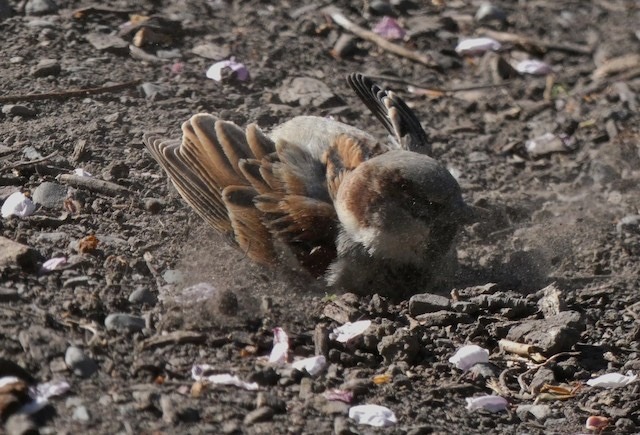
a house sparrow dustbathes on the ground. most birds produce oil from their preen gland that is used to keep the feathers healthy; dustbathing helps regulate the amount of oil on the feathers, and also can assist with removal of parasites from the body, penetrating to the skin where the bird may not be able to remove them.
(x)

the little blue heron is a small heron (only 24 inches in length) native to the united states and central america.
adult little blue herons have bluish-grey plumage. juveniles are white, and gradually gain their adult colors. juveniles are often found amongst the much bigger snowy egrets, and it’s theorized their coloration developed so they could blend in and be protected by the larger birds throughout their youth.


little blue herons mainly hunt in shallow water. they eat fish, shellfish, crustaceans, amphibians, small rodents and insects.


the little blue heron is currently rated least concern by the iucn, but their population numbers are decreasing.
source: (x)


the bananaquit is a small bird native to mexico and south america. researchers aren’t exactly sure what family the bananaquit is a part of; for now, they have tentatively been placed with tanagers. bananaquits feed mainly off of nectar, as well as fruit and small insects.
(x)


the malayan banded-pitta is a bird native to a small range in asia including thailand. the pitta is known for its colorful plumage, something it shares with other members of the pitta family. they feed mainly on insects and arachnids, foraging on the ground.
(x)


the eastern bluebird is native to eastern north america, and are one of three bluebird species. bluebirds feed mainly off of insects – grubs and caterpillars are favorites, and when provided by humans, mealworms. due to their diet, they can be greatly affected by pesticides, and at one time they became rare due to population loss from accidental poisoning.
(x)
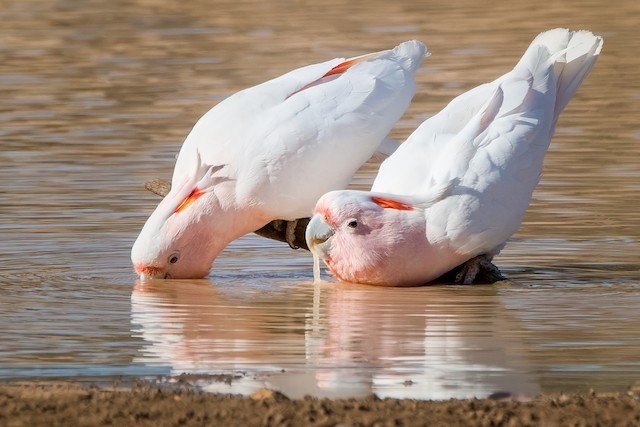
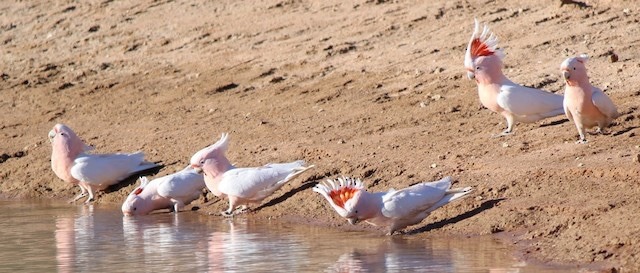
a flock of major mitchell’s cockatoos at a watering hole. all cockatoo species are native to australia. cockatoos are very social; part of the reason why feather plucking is so common in cockatoos in captivity is they typically don’t receive enough social interaction.
(x)

the yellow-throated sparrow is a small passerine bird native to middle-eastern asia. yellow-throated sparrows differ from most sparrows by their thinner, pointed beak.
yellow-throated sparrows are sexually dimorphic. females have either a very small amount of yellow on the throat or none at all, and they lack the chestnut shoulder patches.


these sparrows feed off of grains, seeds, fruits, insects, nectar, and berries. they also enjoy some flower petals, and are sometimes seen with pollen covering their heads.

the yellow-throated sparrow is relatively common and is rated least concern by the iucn.
image source: (x)


the western tanager is a brightly colored bird native to western north america. named due to the misconception it was a part of the ‘true’ tanager family, they are actually closely related to cardinals. both male and females have large amounts of yellow on the body, but only males have the reddish-orange head.
(x)


the rainbow bee-eater is the only member of the bee-eater family found in australia. the species gains its name from their diet consisting of insects, with a fondness for bees and wasps. bee-eaters are immune to bee stings, but rub the stinger against a branch before they eat to remove the poison.
(x)
 today's bird