

amazons love bathtime!
amazons love bathtime!
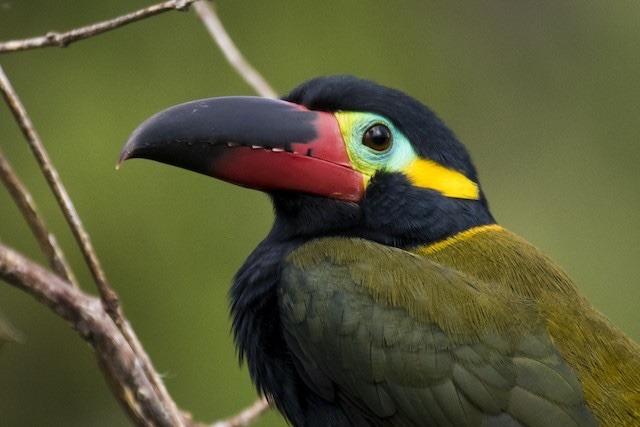
the guianan toucanet is a small species of toucan found in the amazon rainforest, recognizable by the bright red splash on their beak. toucanets are smaller members of the toucan family, with noticeably smaller beak to body ratios than birds like the toco toucan.
(x)

todays bird is: prada the white-fronted amazon!

the white-fronted amazon is a species of parrot native to central america. they are the smallest of all the amazon parrots.
white-fronted amazons feed off of fruit, berries, flowers, buds, seeds, and vegetation.

these birds live in small flocks of up to twenty birds. these flocks sometimes mingle and congregate, causing groups numbering in the hundreds.

the white-fronted amazon is fairly common in captivity – but not easy to keep. they can be loud and destructive, though they are also intelligent and can be great companions. in captivity, amazons are prone to feather picking.

like most parrots, white-fronted amazons form monogamous breeding pairs. nests are made in the hollows of trees, and three to four eggs are laid.

male and female white-fronted amazons can be differentiated by the red on the wing in the male, and the lack of red on the female.

despite some trapping for the pet trade in recent years, the white-fronted amazon is rated ‘least concern’ by the iucn, and is common throughout its range.
source: (x)


a headshot of a st. vincent amazon. these parrots are found only on the carribean island of st vincent, and there is estimated to be less than 600 of them left in the world.
(x)

the st. vincent amazon, sometimes known as the st. vincent parrot, is a large amazon parrot native to the carribean island of saint vincent.
these birds are unique in that no two are alike. they naturally come in two morphs; golden-brown and green. within both of these morphs, there is lots of variety, and no bird’s coloration exactly matches another’s.


these birds were once fairly common on the island. however, trapping for the pet trade, hunting for food, and habitat destruction has taken a toll on their population. these birds are now listed as ‘vulnerable’ by the iucn. a captive breeding program has started with goals of returning more birds to the wild at some point.


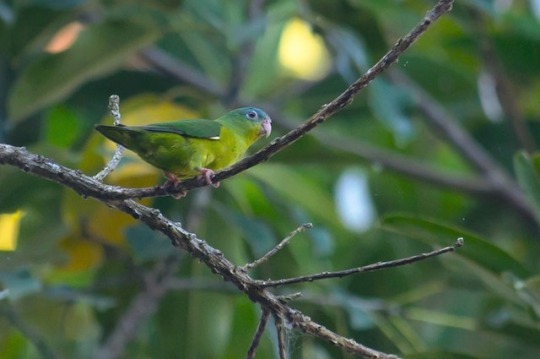
the amazonian parrotlet, also known as the manu parrotlet, is a small parrot native to the amazon.
the amazonian parrotlet was only discovered in the 1970s, and little research has been done on them. they are somewhat elusive and hard to spot, and frequently are found mixed in with other species of parrotlet or larger birds.
the amazonian parrotlet is known to feed off of mainly bamboo seeds.
unlike some other species of parrotlet, the amazonian parrotlet is not sexually dimorphic – or, the current research, which has lacking, has not identified any differences between male and female plumage yet.
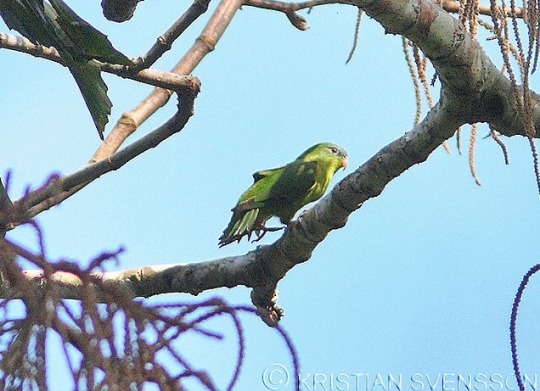
due to how little is known about the amazonian parrotlet, it’s hard to know whether or not they have a healthy population or if they are being affected by habitat loss or trapping, like many other species in their range.
source: (x)
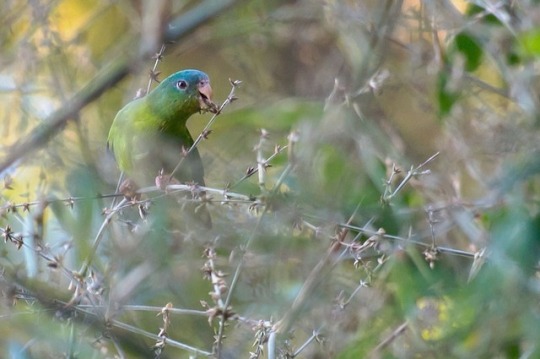

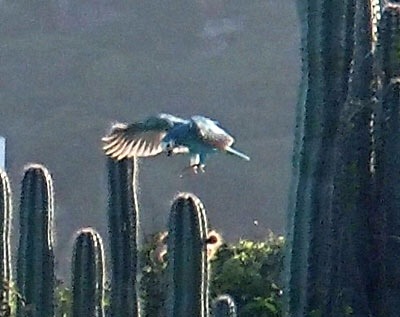
yellow-headed amazons are typically bright green with a yellow head. however, this bird is an unusual blue and white. mutations like these are usually seen only in captivity, but this wild parrot was spotted in bonaire.
source: (x)


this is a blue-fronted amazon with an unusual color mutation, sometimes called ‘red’ or ‘chocolate raspberry’. these parrots are rare and expensive, despite their breeding coming under some criticism. these parrots have never been seen in the wild with this mutation, and even in captivity they are rarely available to the public.
source: (x)
a lot of people believe that they have to travel to parrots’ native ranges to see them in wild flocks, but there are lots of feral colonies of parrots established across the u.s.! these flocks are descended from released or escaped pet birds, so yes, they may be slightly different from native flocks in their own range, but it’s still a unique experience to see them outside of captivity.

 today's bird