i see a lot of people recently bashing people who own pet parrots, accusing them of being animal abusers or terrible people. while it’s one thing to take a parrot from the wild, these are captive birds that cannot be released. and they have nowhere to go. parrot sanctuaries are overflowing – there is just not enough space for parrots. condemn the wild parrot trade and breeders who know the reality of the situation and continue to profit off it anyway, but don’t bother knowledgeable people who do everything they can to care for their feathered companion. if you want more space in rescues, consider donating or volunteering your time.
I would like to adopt another parrot someday, but I think it would be very strange to adopt something older than you. Parrots can live to be 60+, so I could someday be the guardian of an animal who lived a few decades before I was even born and that’s just weird.
I don’t think I have the authority. By default, that bird should be my guardian.
the kererū or new zealand pigeon isa fruit-pigeon native to new zealand. ‘kererū’ is an onomatopoeic name, based on their cooing vocalizations. these frugivorous birds feed mostly on peaches and introduced plums, but their love of fruit has given them a reputation for trouble. kererū often eat berries that have hung on the tree too long and fermented, causing them to become ‘drunken’ and act erratically.
They’re also one of only two surviving birds large enough to eat the fruit of several endemic trees that rely on birds to distribute their seeds, such as the tawa, so efforts to conserve them help biodiversity in more than one way. Government bodies and a citizen science NGO promote an annual Great Kererū Count, a brief period of time during which people in New Zealand are encouraged to report the time and place of any kererū sightings.


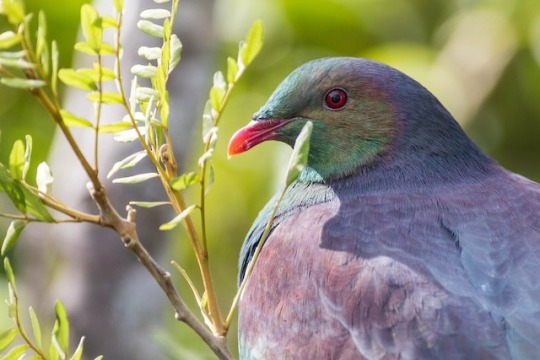
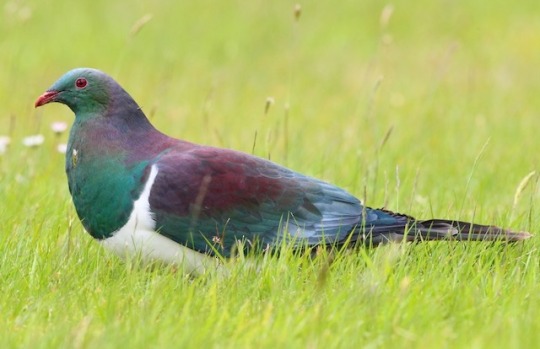
 today's bird