Indoor bird cages should be kept away from windows and doors, covered at all four sides with no gaps, or opportunity for drafts during the night.
Heat lamps or oil heaters can be used during the night or when the room gets too cold. They should be placed in the corner where your bird generally sleeps, however it shouldn’t be placed too close to the blankets or bird as over heating can occur.
Other options like temperature setting heated perches are also available and can be left on all night provided its not too high. This however this is a questionable resource as there is a potential for over heating on feet and there are reports of high electro magnetic radiation current (enough to power a static radio through a wall!? Source.)
“Bird tents” or “Huts” are an option for single birds however; there should be an emphasis on care and EXTRAmonitoring when using these items as some bird can chew the fabric fibres. If that is the case then instant removal is necessary as the fabric fibres can cause entanglement from loose strings and intestinal obstructions over time if accidently swallowed. Natural materials like sea grass huts or coconut huts are a safer option and provide good insulation for your bird.
If keeping multiple birds together is a safe option (i.e they get along with no issues), then that can also help with warmth as they snuggle up to each other exchanging body heat.
Feeding birds extra food at night just before sleep helps circulating heat through the body. This occurs while digesting food through their system and keeps metabolic rate up when doing so.
Bird jumpers are an option for birds who feather pluck or are used to an indoor environment and are outside during a cool part of the day. You should never put a jumper on your bird without thorough training first, the same as applied for harness training.
During the day, plenty of opportunities for exercise, flight, and enrichment, and playtime with toys can also help regulate body warmth through activities. Food foraging is a great, relaxing way to do this.
Keeping cages near windows where sunlight comes inside directly during the day is a good warming opportunity. However be aware of over heating your bird and if the day warms up move your bird partially out of the sun to provide some shade.
Birds in outdoor aviaries or cages should be provided access to shelter – small enclosed spaces with nest boxes in them, where there are no drafts – for dry spaces and warmth. A wind breaker like solid plastic sheeting should also be attached in winter months. They should be given access to free flowing air, natural sunlight and an easy clean flooring. Generally concrete covered in in a substrate like red compacting gravel or blue metal gravel is an easily cleaned substrate, quick dry and provides a surface that won’t injure young or sick birds if they fall from a height.
In places where it snows or gets below zero Celsius – heat lamps with caging to prevent smashing or chewing of electrical cords – should be used in the sheltered part of an aviary.
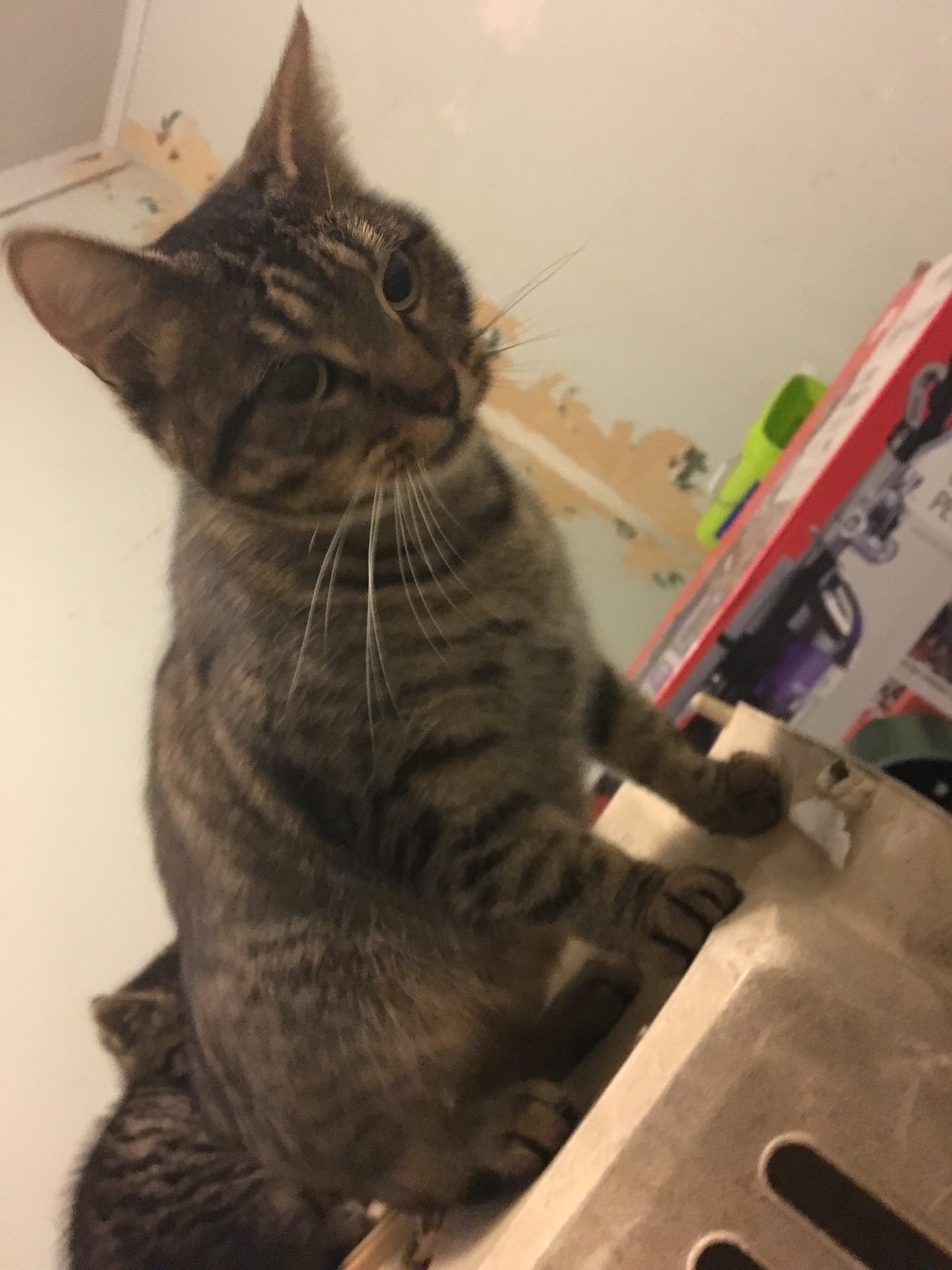
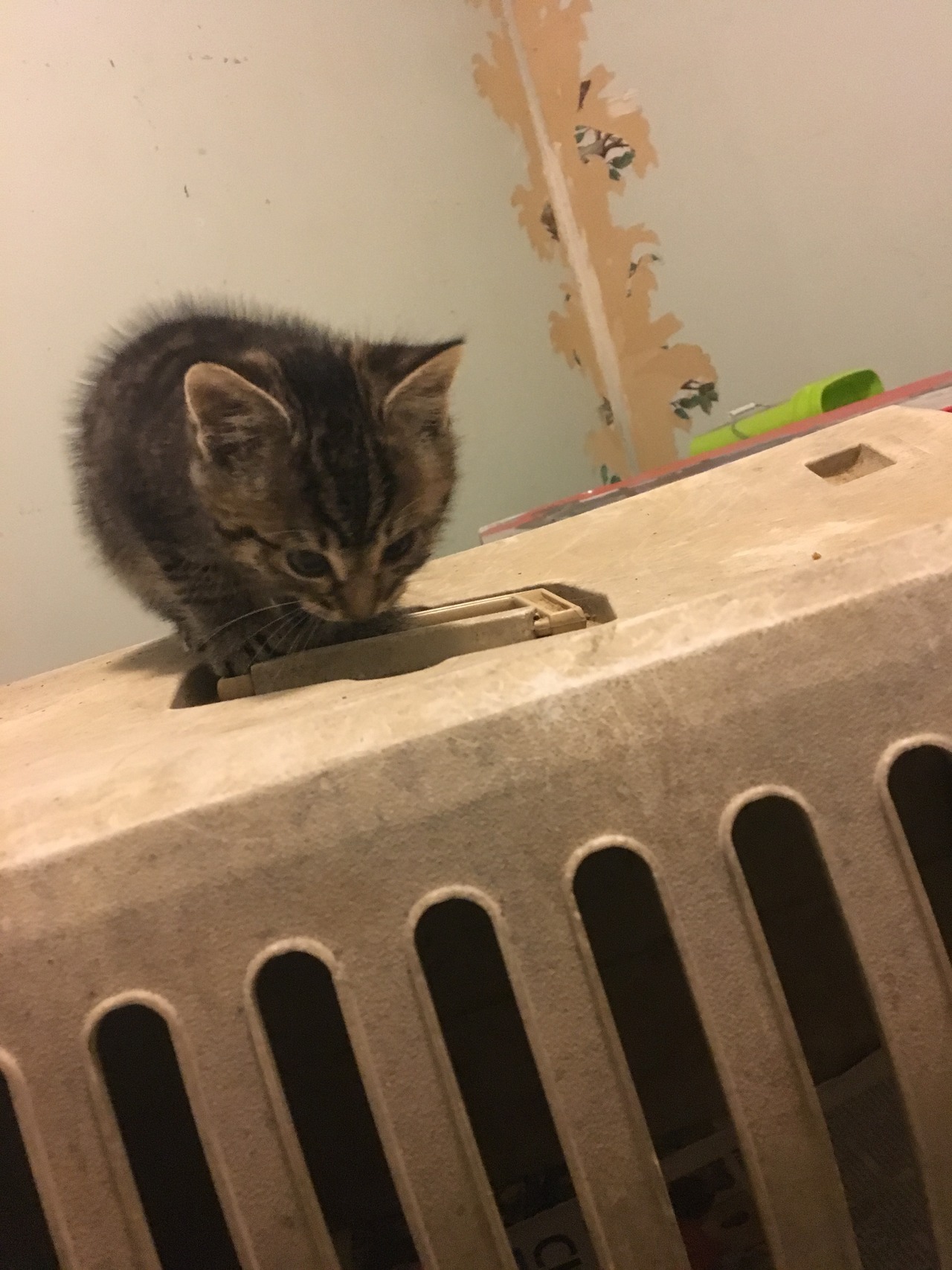
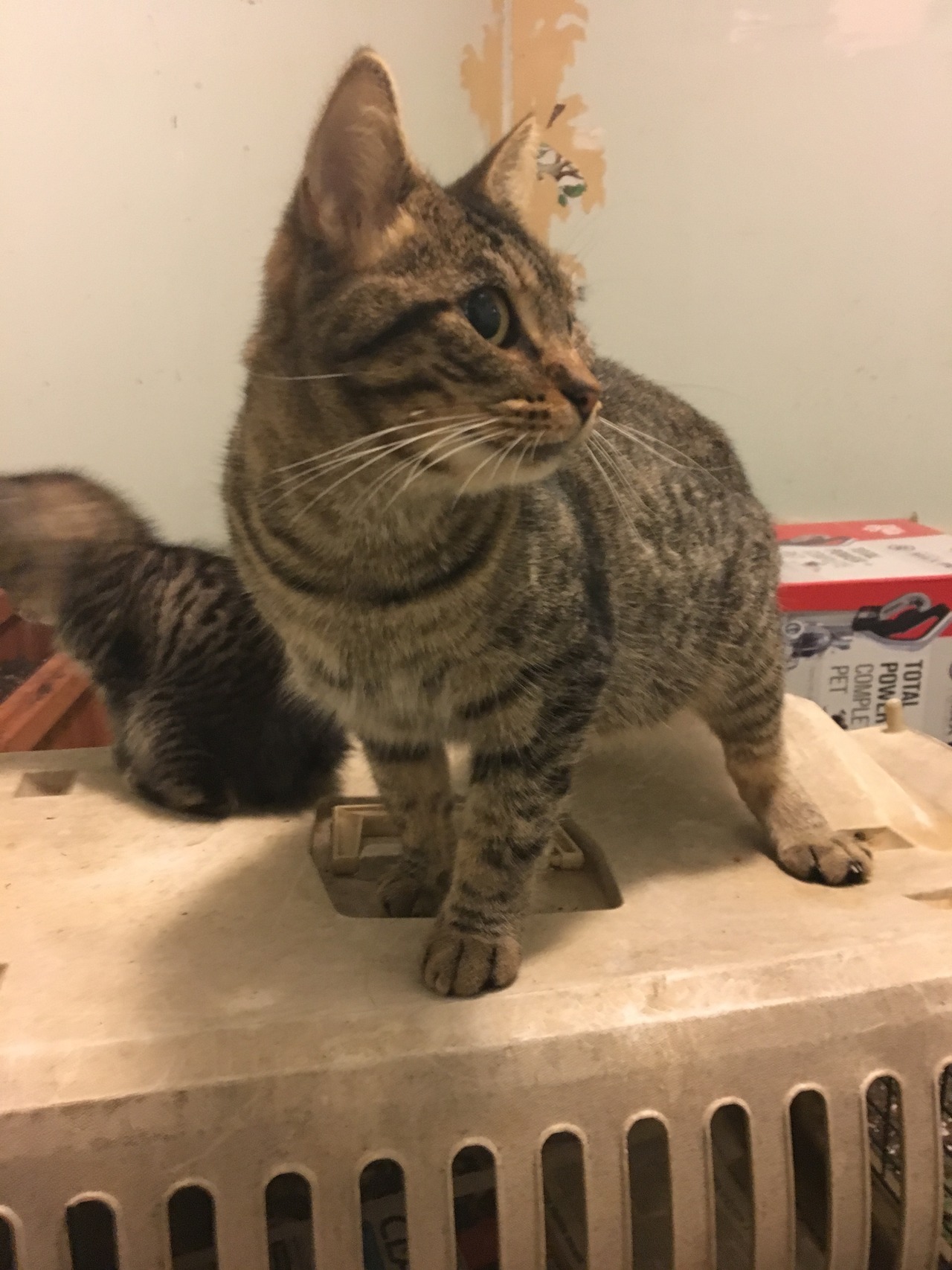
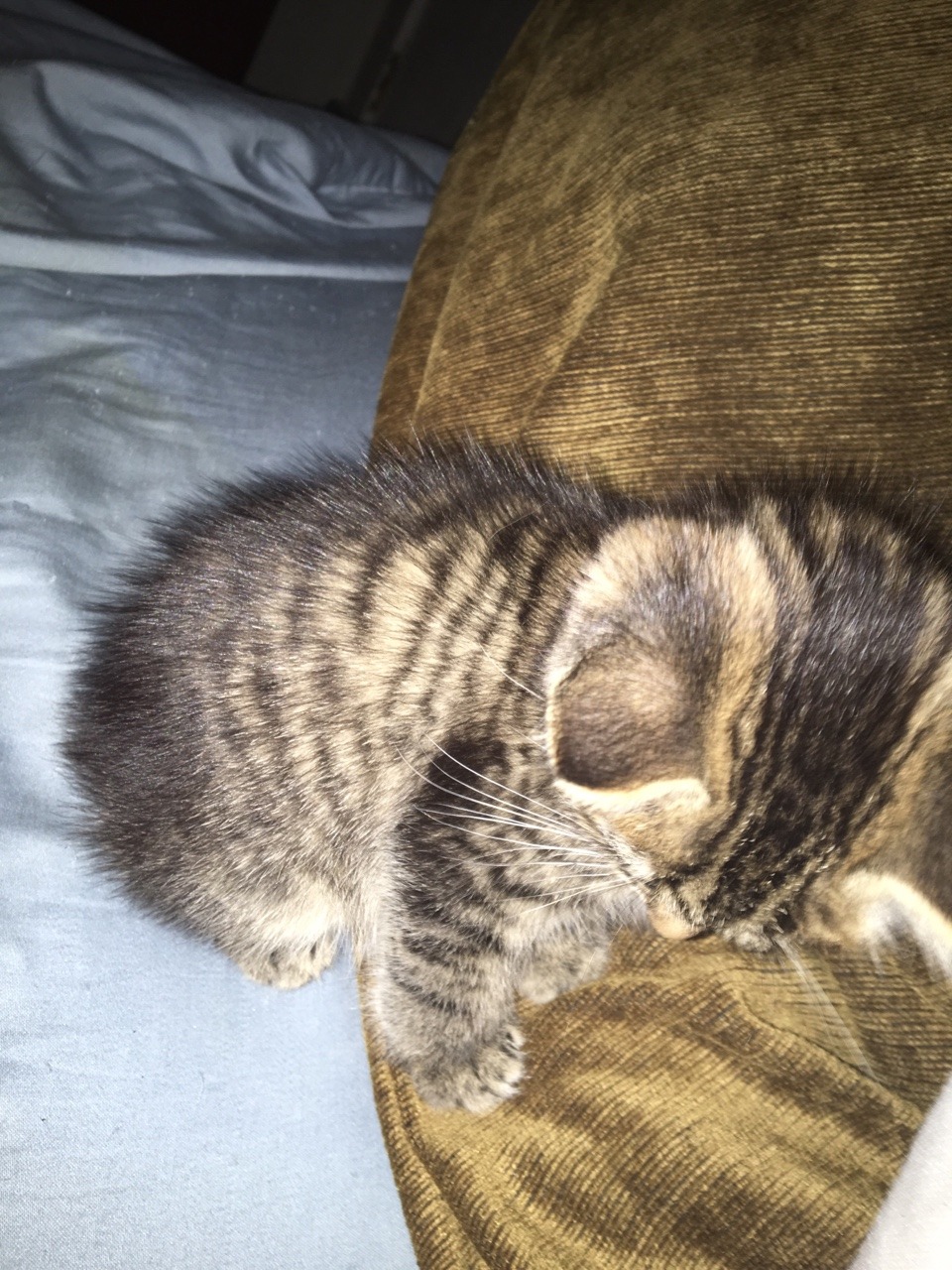
I’m giving this your kitten and her mom to a new forever home. My friend had to leave her house and she needs to leave them. Please if someone is near Jackson, MS of USA and wants bobtail tabbies please pm me.
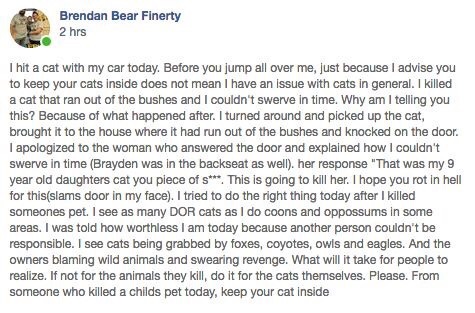
Speaking as someone whose parents and family members still refuse to be persuaded to keep their cats inside, if your cat dies as a result of being allowed to roam freely, whether hit by a car or killed by another animal or disease or whatever, that’s 100% on you. The owner of the cat is responsible for the death of that animal as surely as if they killed it themselves because it was completely preventable. This makes people upset to hear, but you can’t claim to love something in one breath and then completely abandon them to the many dangers of the world in the next. If you love your pet you do everything in your power to keep it safe.
We need to keep saying “what happens to an outdoor cat is 110% the owners fault” until owners realize this. That person who hit the cat probably already felt horrible and if they couldn’t stop, they couldn’t stop. They didn’t mean “I was too busy, I couldn’t care to stop” they were literally saying “they could not physically stop the car in time to not hit the cat”. It was never their fault, and it wasn’t the cat’s either because they don’t know any better. It’s 110% the owners fault and I’m going to keep saying it until every horrible cat owner puts there cat back inside where it belongs.
Also think about your kids if you don’t care for the cat. How do you think that 9 year old, who didn’t know outdoor cats were bad, felt? They had no idea this would happen because of their ignorant parents. Their parents ended a life and damaged their child’s. This is a traumatizing event for a young child. And it’s so unfair for everyone involved… Except the parent obviously.
Just keep your damn cat inside or do an actual humane thing and just don’t fucking get one.
K all of this makes sense, but cats are meant to roam and play. You SHOULD let your cat outside, at least into the backyard if you feel safer that way, so they can get the excersize they need to live a happy life. Also, this play time ensures that the cat’s extra energy burns (mostly) off and they won’t destroy your belongings because they’re just so. bored. that they scratch things. Train it to walk on a leash if you have to, but let your cats outside.
Although contained outdoor time or walks on a leash are good enrichment they’re not a necessity, cats can thrive without ever being allowed outside in any capacity.
If your cat is bored and destructive inside it’s because you are not engaging in enough interactive play to keep them entertained, it’s because you are not providing them with enough environmental enrichment to meet their needs.
I should be going to sleep but I’m a sucker so I’m going to break this down instead.
Cats require exercise, this is integral to both their physical and emotional wellbeing. Permitting them unrestricted outdoor access can absolutely meet their exercise needs, but it is not safe to do so, and as their caregivers we must balance their health and their happiness instead of choosing one over the other.
The reason there’s this misconception of indoor cats being bored and depressed, which can lead to inactivity and weight gain, or destructive is because cat owners do not play with their cats enough.
Only 64% of the owners in this study played with their cats twice a day, of that a meager 25% reported 10 minute play sessions. It was also reported that the cats with 5 minute play sessions displayed fewer behavioral problems than those with 1 minute play sessions.
Engage your cat! There’s this huge misconception that cats are low maintenance pets, they’re aloof and independent and they’ll take care of themselves and that’s not true! They need more from than to leave out some toys and scoop their box.
Jane Ehrlich, from the cat division of the International Association of Animal Behavior Consultants, recommends multiple 20 minute sessions of real interactive play each day. A key term here is real, behaviorist Pam-Johnson Bennett has an article on proper interactive play with cats, it’s important to be involved and to let them complete the sequence of the kill.
Environmental enrichment matters too! Outdoors your cat doesn’t just get exercise stalking prey [or running from loose dogs, fighting other cats, etc] you’ll often see them climbing trees, atop of fences, and so on.
“”Not everyone can do this!”” Interactive play and environmental enrichment are the minimum standards of care for a cat, if you’re unable to meet the bare minimum standards of care for an animal you should not have that pet. You are not owed a cat, you are not entitled to one, if you’re unable to adequately provide for a cat than do not have a cat.
There are people who work full-time jobs, who work multiple jobs, who attend school, who live with mental and/or physical disabilities, who live in small apartments, who have a low income, etc. and are still able to meet their cats needs. I know because many of my followers fall into one, or more, of the aforementioned categories.
Cats are a menace to the environment. This pertains to the persons tags, the damage domestic cats do to the environment is so well documented I can’t believe people still try to deny it. Them again, there are still people who deny climate change, so I guess it isn’t too suprising.
There’s not only the issue of mortality due to predation, but cat saliva is full of pathogens that birds, reptiles, and rodents are sensitive to. Even if a captured prey-item is alert and unharmed to the untrained eye they may still die later as a result of being exposed to these pathogens, as a result of the stress of being predated upon, or as a result of internal trauma that can’t be detected without being seen by a wildlife veterinarian.
You’ll often hear outdoor cat proponents claim it’s feral cats that are an ecological disaster, not their beloved Fluffy, but I’ve broken down before how owned free-roaming cats are far from blameless.


 today's bird