just a little turkey image i made for Solpets Hopefully it gets used this year. i spent like all day making an icon and banner with it plus the image itself
the australian brushturkey, often known as the bush turkey or scrub turkey, is a large bird native to australia that, despite the name, has little relation to the wild turkey.
the brushturkey feeds off of grains, insects, and fallen fruits, though it sometimes grabs fruits from low branches. they’ve become increasingly considered a pest, as they will feast off of crops and raid gardens.
the brushturkey has an extremely rare and unique method of nesting, more similar to a crocodile’s than most other birds. male brushturkeys work tirelessly to create a huge mound of decomposing material, earth, and other materials off the ground. up to 6 females’ eggs will be laid in the mound – mounds have been found to contain up to 50 eggs. anyone familiar with composting will know that inside a compost mound, the decomposing material creates warmth. the same thing happens with the brush turkey mounds. the brush turkeys will stick their beaks in to check that the temperature is just right, and add or remove material accordingly. much like reptiles, the gender of the offspring can be partially determined by the warmth given to the eggs. if the mound is cooler, more male chicks will be hatched, and if it’s warmer, more female chicks. once the chicks hatch and have burrowed out of the mound, they are on their own. they are hatched ready to fly, and receive no assistance from their parents. the nestbuilding behavior of the turkeys has led to further viewing of them as a pest, as they sometimes raid gardens for large amounts of mulch to construct their nests.
brushturkeys were traditionally used as food by aboriginal australians, but it became a common practice during the Great Depression. the turkeys were viewed as a reliable source of food, and since many of them were accustomed to humans at this point, they were easy targets. both adult turkeys and eggs were eaten. this led to a plummeting brushturkey population. luckily, as the economy slowly recovered, the brushturkey population slowly rose again.
brushturkeys are beautiful, interesting birds that personally remind me a lot of velociraptors with their build. let’s hope these interesting modern-day dinosaurs are around for a long time!
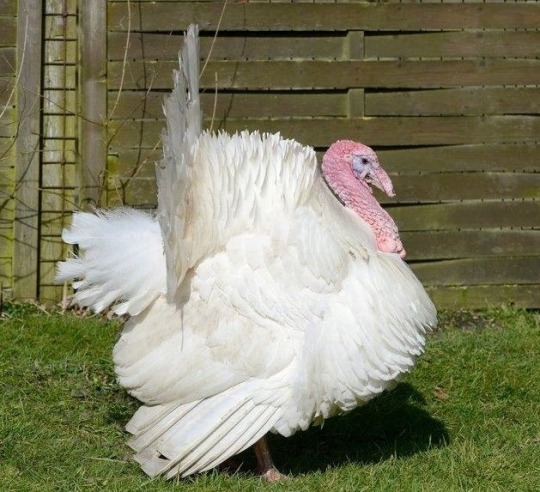
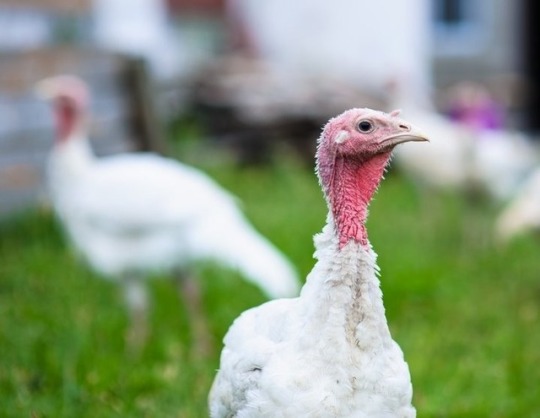
the broad breasted white is the most widely commercially used turkey; they are bred exclusively for meat production. these turkeys are so heavy that they mainly are bred through artificial insemination, as they cannot typically naturally mate, and are also flightless. even if spared from slaughter, broad breasted whites typically only live to around two years old; they suffer from obesity-related issues such as heart disease. they have an incredibly fast growth rate, and typically reach 35-40 pounds.
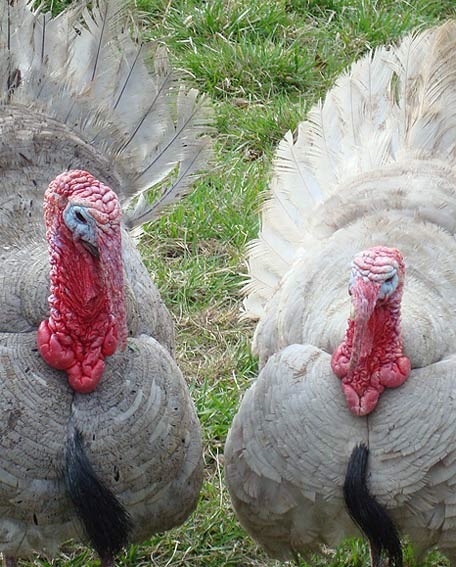
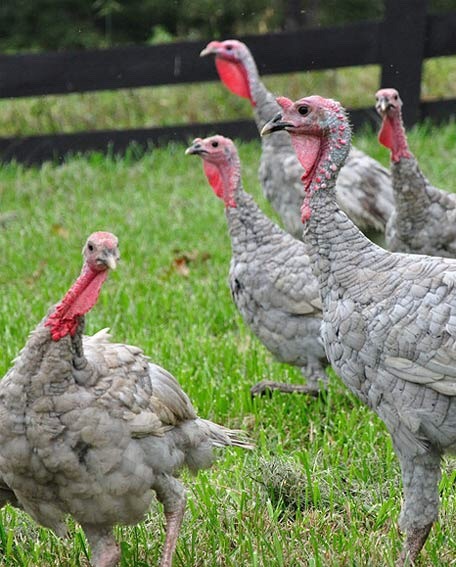
the blue slate turkey is a heritage turkey breed descended from domesticated wild turkeys from mexico. blue slates are large (females are around 14 pounds, and males around 20-25), but do not reach the same size as commercially bred turkeys; they are usually admired for their plumage. although these turkeys can be slate blue, black, and white, only the slate blue color is acceptable for bird showing standards.






 today's bird