Happy Sunday, everyone! And, thank you for 1000 followers 🙂 I promised I’d write up a new post for those of you who just started following me, so enjoy this video of one of my black sex-link hens, the Queen, being cute and dust-bathing in the sun.
I think everyone here on birdblr loves to watch their birbs bathe, whether it’s done in water or a nice patch of dirt. Some bird species have no problem bathing in either, but most, if not all gallinaceous birds (poultry, including chickens and quails) will only dustbathe. Why do they do it – how does rolling around in dirt keep you clean?
The most common answer people will give you is that dustbathing keeps ectoparasites – mites and lice – off a chicken’s skin and feathers. While this has been common knowledge among both chicken farmers and backyard chicken owners for decades, you might be surprised to learn that no one ever actually tested this scientifically until 2012. There are possibly hundreds of studies which basically tell us that dry dirt or sand is just like dry shampoo for the birds, absorbing excess oil from their feathers, and removing it once the dust is shaken, or “roused” out. Certain species of avian mites and lice feed primarily on the oil, so it was believed that regularly removing it would leave the parasites without a food source, if the physical movements involved in dustbathing behaviour didn’t dislodge them first. Martin and Mullens were the first researchers to actually test and support the hypothesis that dustbathing behaviour evolved, at least in part, specifically for the purpose of reducing the number of parasites on a bird’s body. Their work also showed that sulfur, which is among one of the many naturally occurring elements in dirt, plays a big role in keeping parasites away by killing them through direct contact and possibly fumigation. So, there is solid evidence that dustbathing helps with parasite control, although no one ever really bothered looking into it, for some reason.
What was more commonly studied was the effect of dustbathing on a chicken’s feathers. By removing all of that excess oil, down feathers in particular become fluffier as a result (side note: this is also one of the few instances where the word “fluffy” is used in a scientific paper). This increases the overall insulation ability of the plumage, and hens housed on an appropriate dustbathing substrate have been shown to have lower temperatures on their backs (important for keeping cool on hot days like today!).
Here’s the not-so-cute, kinda depressing part of this post. We know that dustbathing has all these hygiene-related benefits for the birds. So why are hens kept on commercial egg farms (note: I’m only speaking based on current Canadian poultry industry practices) not given anything to dustbathe on? Generally, commercial birds who never get the chance to go outside don’t become exposed to ectoparasites, which most farmers are only concerned about because they can cause a hen to lay fewer eggs per year. Barring that, it’s argued that there just isn’t any other reason to give hens a chance to dustbathe. That’s where animal welfare researchers come in (and that’s why I love my job). In the last few decades, there have been a plethora of studies showing that hens kept in wire cages will “sham” dustbathe, or perform dustbathing behaviours when there is no dust to begin with. At that point, the behaviour becomes labelled as “abnormal”, indicating that the animal has some need that is not being met. Other studies have demonstrated numerically how much work a hen will put in to dustbathe – for example, some experiments involve hens learning to push through heavy doors (up to a certain percent of their own body weight) just to access a pan of peat to dustbathe in. Finally, a fascinating study done very recently showed that dustbathing quail had a higher tendency of exhibiting possible facial indicators of positive emotions (i.e. dustbathing birb = birb with poofier face = possibly happy birb). With such a large body of solid, scientific evidence to support a significant emotional significance of expressing proper dustbathing behaviour in birds (I don’t know about you, but there are days when a nice bath/shower is more about stress relief and self-care than just keeping clean), researchers have been able to effectively argue for providing dustbathing opportunities to commercial laying hens. In Canada, battery cages will be banned from all egg farms by 2036, and replaced by “enriched housing”, which will be required to include, among other things, a small area for dustbathing behaviour.
So, while it may sound annoying at times when researchers like me say things like “there is/isn’t any scientific evidence for x”, the reason we need to look for that solid evidence is that it’s the only thing that industries and the public will listen to, and often it’s the only thing that can bring about positive (but small) change!
References:
Bertin A, Cornilleau F, Lemarchand J, Boissy A, Leterrier C, Nowak R, Calandreau L, Blache MC, Boivin X, Arnould C, Lansade L. Are there facial indicators of positive emotions in birds? A first exploration in Japanese quail. Behavioural processes. 2018 Jun 30.
Martin CD, Mullens BA. Housing and dustbathing effects on northern fowl mites (Ornithonyssus sylviarum) and chicken body lice (Menacanthus stramineus) on hens. Medical and veterinary entomology. 2012 Sep;26(3):323-33.
Van Liere DW, Bokma S. Short-term feather maintenance as a function of dust-bathing in laying hens. Applied Animal Behaviour Science. 1987 Aug 1;18(2):197-204.
Wichman A, Keeling LJ. Hens are motivated to dustbathe in peat irrespective of being reared with or without a suitable dustbathing substrate. Animal behaviour. 2008 Apr 1;75(4):1525-33.
guys i need your help finding more pictures with this same energy. this is very important
I hereby invoke the raw power of all these blurry and vaguely menacing birds to banish negative energy from your life. Reblog to accept their protection.
[Captions: Top Left: Anger (“UNHAND ME AT ONCE”) Top Right: Confusion (“WHAT IN THE HOLY HELL JUST HAPPENED HERE”) Bottom: Acceptance (“SCRITCHES PLS”) ]
todays bird is: allen the budgie! much love to you, allen!
I feel like it’s necessary to make this post as someone who had no idea what they were doing when they got their first bird. This isn’t intended to shame Petco employees, who are just doing their jobs, or people who have taken advice from Petco in the past. This is just observations from someone who hates to see birds kept in subpar conditions.
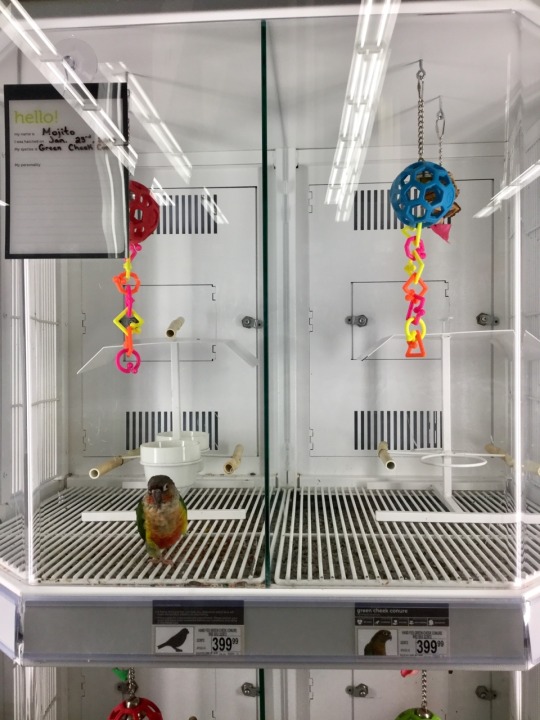
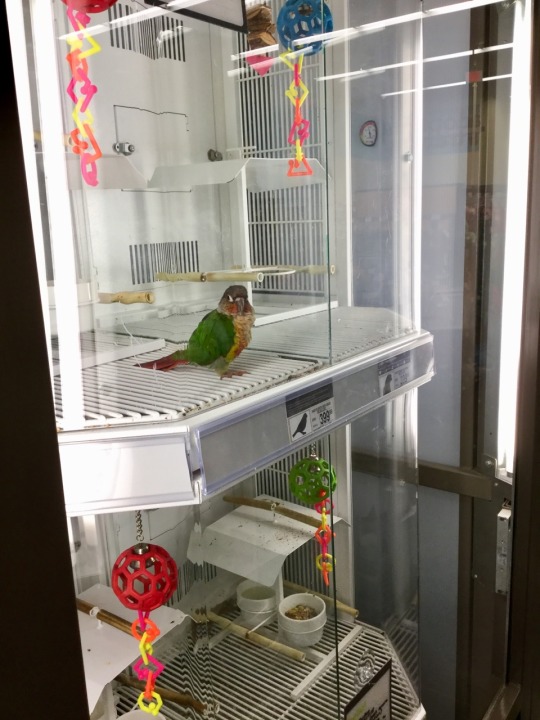
First off, let’s look at the way Petco treats their pet birds – and implies through doing so that it’s an acceptable standard of care for bird owners. These were all taken today at my local Petco.
Cages this small are not acceptable for any bird. It’s more important for a cage to be wide than tall; birds need to fly and this provides them the space to do so. This is suitable as maybe a quarantine cage at best. There definitely needs to be more toys as well, especially considering these birds stay in the cage all day and do not come out for interaction.
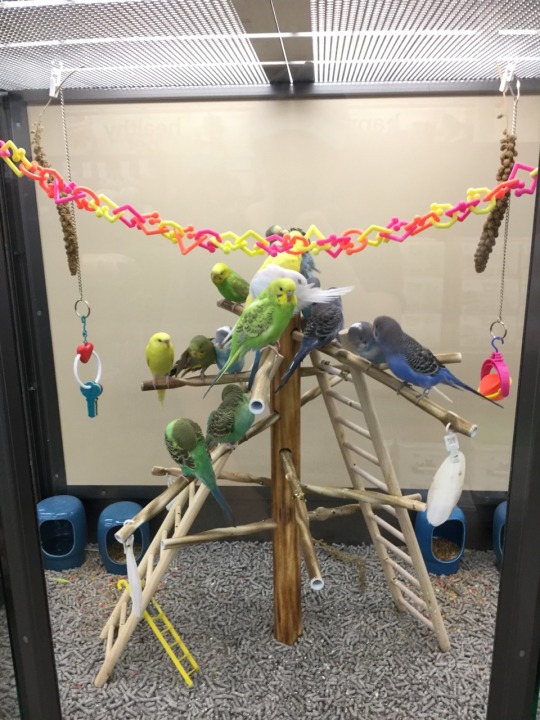
This is the budgie cage. This many birds should absolutely not be kept in a cage this small. Some of the birds were visibly stressed out, and got scared and upset when people walked by. There’s very few toys in here as well (though at least they have each other’s company). Millet is a treat; offering this much millet at a time is pretty unhealthy and shouldn’t be done. If you look closely, you can see the perches do not vary in texture or size and are all smooth. This is pretty awful for a bird’s feet. Birds need perches of varying texture, preferably 3-4 different kinds, or they can have conditions such as bumblefoot or problems gripping.
The birds are only fed pellets and seed (mainly seed). Even considering that budgies are grainivores, this is a pretty awful diet. They need plenty of fresh vegetables and fruit in their diet, and this is the kind of diet that leads to health problems over time.
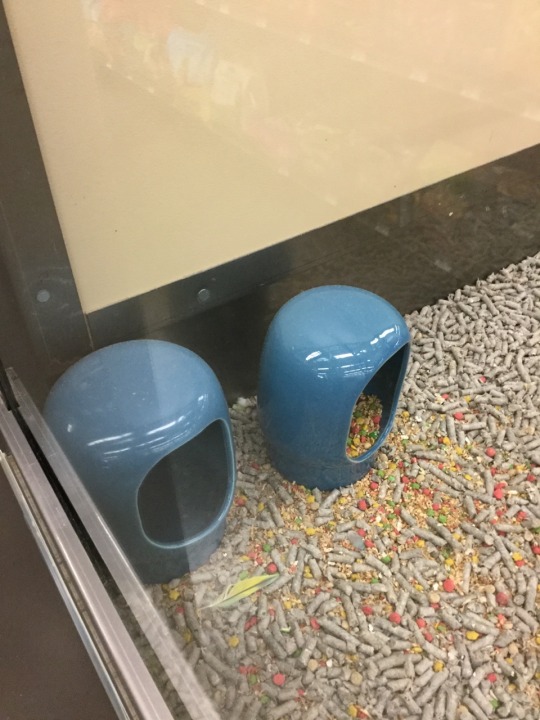
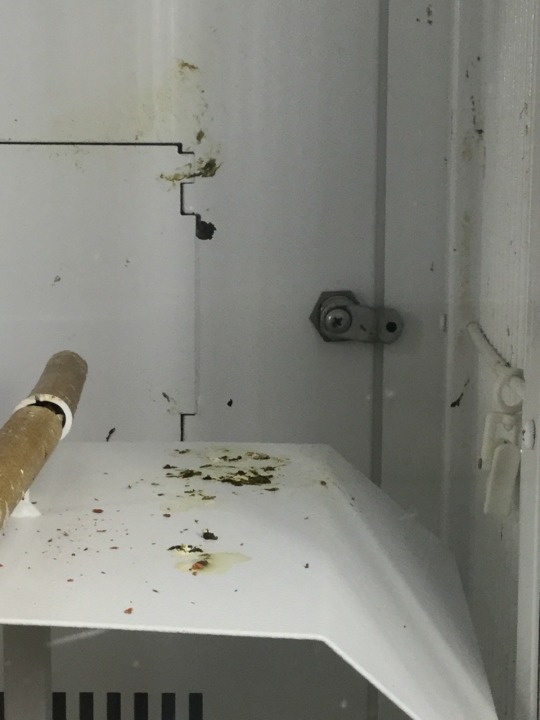
There’s a buildup of droppings and debris in the cages – even on easily wipeable surfaces.
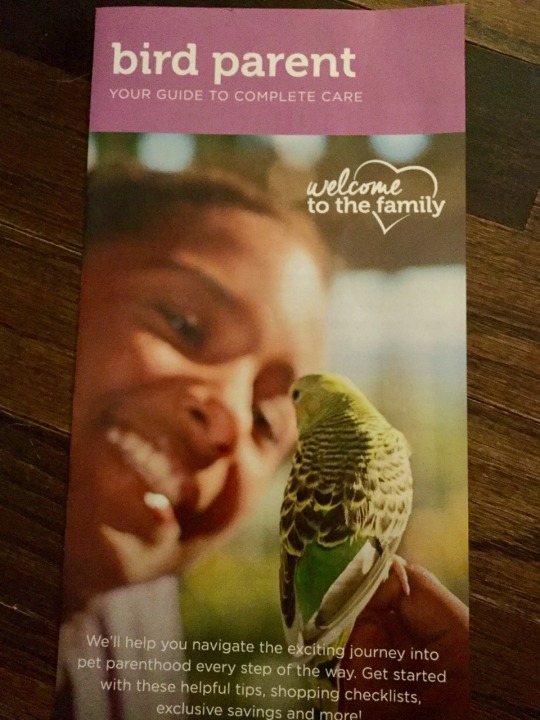
Now let’s take a look at the bird care brochures available near the bird section and at the register. Maybe they will advocate better birdkeeping practices?
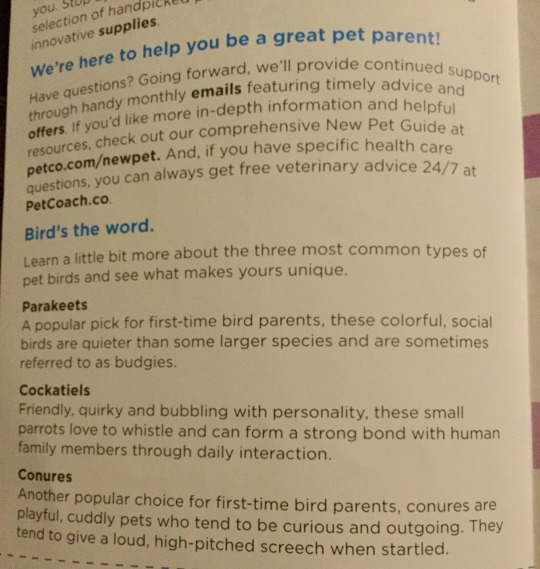
Conures don’t give a high pitched screech when startled. Conures scream whenever they want. It’skind of cruel, honestly, to market them as a first-time, easy bird for someone who may be bringing them home to an apartment or noise-sensitive household. Conures are loud, and loud very, very frequently. Even green cheeked conures, which were sold in this Petco, aren’t great first time birds. They are loud, are known for being ‘beaky’, and are overall a handful. Are they awesome birds? Yeah! But you need to know what you’re getting into before purchasing them.
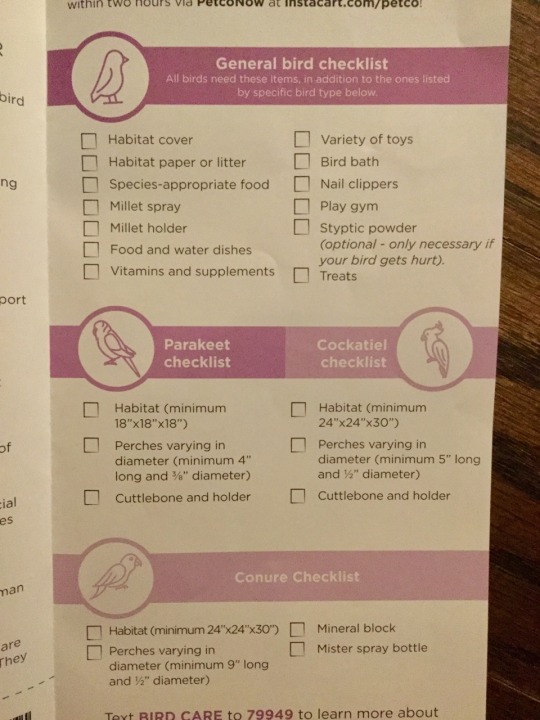
Let’s look at the “general bird checklist”. Pretty decent at first glance, even if they haven’t fulfilled many of the requirements for their own birds. But there are a few issues you should be aware of.
Vitamins and supplements are not necessary if your bird is eating a healthy diet. This doesn’t mean your bird will get sick if you DO give them, but it’s overall kind of a scam. Of course, Petco wants to max out the money they make off of your new buddy, but if you are feeding your bird well, this is absolutely not necessary.
Millet spray/Millet holder. “All birds need these items” being applied to this is absolutely bizarre. Many bigger bird species will not even touch millet due to how small it is. It’s a great treat, but is in no way crucial to your bird’s care, even if they do like it. It has very little nutritional content and should only be a treat, not a diet staple.
Styptic powder is something you shouldABSOLUTELY have on hand!! If you nick the quick of a bird’s toenail while clipping nails, or they have issues with breaking feathers or blood feathers, you will need styptic powder. Your bird’s blood will not clot and they can lose a significant amount of blood from minor injuries.
There’s nothing much wrong with the ‘individualized’ care guides – other than the big, glaring issue of cage sizes. All of these ‘minimum’ cage sizes are way, way too small. For reference, here is an 18 x 18 x 24 cage:
This doesn’t apply to just Petco. Please be wary of information from any chain pet store. Many of them are trying to make birds seem as easy as possible so you’ll buy one and make them more money. Birds are complicated and delicate creatures – PLEASE do your research from reputable sources before getting any new pet.
I just wanna throw my two cents in on how bad big pet stores can be with their birds and info. So my friend who I’ve know since high school, and who’s tiels I’m currently watching, got a pair of cockatiels from petco around 10ish years ago. Her family was told that both birds were male, around a year old, and that they were getting them for a great price at $200 for the two of them. Well cut to 4 years later and one of them lays an egg and it turns out they’re both female. Cockatiels aren’t too hard to sex and if they were at a year they would have had their adult feathers in by then, unless they were wrong with the age. Also I haven’t gotten a parrot from a breeder in a long time, like 14 years, but when my grandma got Candy she was $100 and she was a lovely hand feed bird who we got to go visit before we could take her home. What I’m saying is $200 for two cockatiels who are terrified of people wasn’t a ‘great price’, not that it matters, and it bothers me when people try selling animals the same way you would try to sell a car. Lastly I need to mention their feet. Both birds were missing parts of their toes or their whole toe on some parts of their foot. I brought this up to my clipper friend one day asking her what could have caused it and she said they were most likely bitten off by a larger parrot. My finch, who I got from petsmart, is also missing almost all of the toes on one of her feet. I also did have a friend from college who worked for petsmart and he did tell me that they don’t always take great care of their birds before they put them out for sell and injuries likes this were common. I don’t recommend getting animals from big pet stores and I never recommend listening to there advice. If you want an pet do your research and I don’t mean looking a one website, act like your a college kid writing your thesis paper.
Adding on, I got my Strat from a breeder. He’s a cockatiel, he was 9mo when I got him, I finished weaning, though he provided the option of separating him and weaning him on site. Even then, he gave me his home number so I could call virtually any time with questions, and one time I had to! I ran out of bird formula and didn’t know if I needed a specific brand, or a specific ingredient list, etc. He answered right away, and gave me the info, as well as the option of coming in first thing in the morning if I had enough to get thru the night.
On top of that, the breeder gave me a harness(he makes the aviator harness, I even got to see his workshop~! It was super neat!), and lessons on how to use it, if there were any differences between that and what’s on the cd he gave me if I need to watch it again. Strat wound up costing me $191 including harness, but it was completely worth it because of how thorough he was and how obvious it was that he cared for the well-being of every bird in his care and sold to people. He even got bad reviews for a lady that was pissed he refused to give her a bird like any old pet store! Like, lady, it’s because he cared!
Edit: adding Strat’s cage as of, well, a few minutes ago.
I feel like it’s necessary to make this post as someone who had no idea what they were doing when they got their first bird. This isn’t intended to shame Petco employees, who are just doing their jobs, or people who have taken advice from Petco in the past. This is just observations from someone who hates to see birds kept in subpar conditions.
First off, let’s look at the way Petco treats their pet birds – and implies through doing so that it’s an acceptable standard of care for bird owners. These were all taken today at my local Petco.
Cages this small are not acceptable for any bird. It’s more important for a cage to be wide than tall; birds need to fly and this provides them the space to do so. This is suitable as maybe a quarantine cage at best. There definitely needs to be more toys as well, especially considering these birds stay in the cage all day and do not come out for interaction.
This is the budgie cage. This many birds should absolutely not be kept in a cage this small. Some of the birds were visibly stressed out, and got scared and upset when people walked by. There’s very few toys in here as well (though at least they have each other’s company). Millet is a treat; offering this much millet at a time is pretty unhealthy and shouldn’t be done. If you look closely, you can see the perches do not vary in texture or size and are all smooth. This is pretty awful for a bird’s feet. Birds need perches of varying texture, preferably 3-4 different kinds, or they can have conditions such as bumblefoot or problems gripping.
The birds are only fed pellets and seed (mainly seed). Even considering that budgies are grainivores, this is a pretty awful diet. They need plenty of fresh vegetables and fruit in their diet, and this is the kind of diet that leads to health problems over time.
There’s a buildup of droppings and debris in the cages – even on easily wipeable surfaces.
Now let’s take a look at the bird care brochures available near the bird section and at the register. Maybe they will advocate better birdkeeping practices?
Conures don’t give a high pitched screech when startled. Conures scream whenever they want. It’skind of cruel, honestly, to market them as a first-time, easy bird for someone who may be bringing them home to an apartment or noise-sensitive household. Conures are loud, and loud very, very frequently. Even green cheeked conures, which were sold in this Petco, aren’t great first time birds. They are loud, are known for being ‘beaky’, and are overall a handful. Are they awesome birds? Yeah! But you need to know what you’re getting into before purchasing them.
Let’s look at the “general bird checklist”. Pretty decent at first glance, even if they haven’t fulfilled many of the requirements for their own birds. But there are a few issues you should be aware of.
Vitamins and supplements are not necessary if your bird is eating a healthy diet. This doesn’t mean your bird will get sick if you DO give them, but it’s overall kind of a scam. Of course, Petco wants to max out the money they make off of your new buddy, but if you are feeding your bird well, this is absolutely not necessary.
Millet spray/Millet holder. “All birds need these items” being applied to this is absolutely bizarre. Many bigger bird species will not even touch millet due to how small it is. It’s a great treat, but is in no way crucial to your bird’s care, even if they do like it. It has very little nutritional content and should only be a treat, not a diet staple.
Styptic powder is something you shouldABSOLUTELY have on hand!! If you nick the quick of a bird’s toenail while clipping nails, or they have issues with breaking feathers or blood feathers, you will need styptic powder. Your bird’s blood will not clot and they can lose a significant amount of blood from minor injuries.
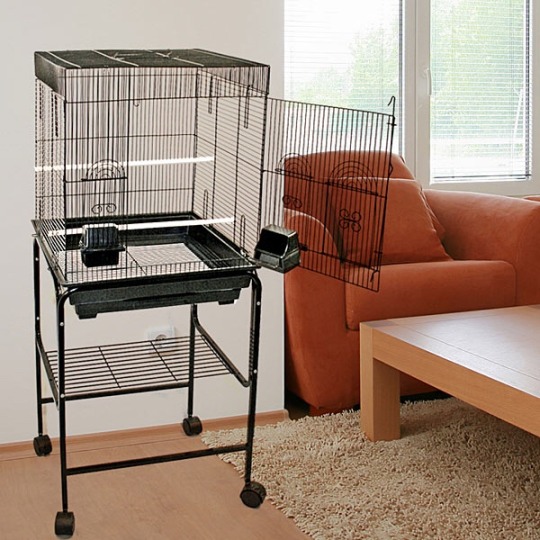
There’s nothing much wrong with the ‘individualized’ care guides – other than the big, glaring issue of cage sizes. All of these ‘minimum’ cage sizes are way, way too small. For reference, here is an 18 x 18 x 24 cage:
This doesn’t apply to just Petco. Please be wary of information from any chain pet store. Many of them are trying to make birds seem as easy as possible so you’ll buy one and make them more money. Birds are complicated and delicate creatures – PLEASE do your research from reputable sources before getting any new pet.
I just wanna throw my two cents in on how bad big pet stores can be with their birds and info. So my friend who I’ve know since high school, and who’s tiels I’m currently watching, got a pair of cockatiels from petco around 10ish years ago. Her family was told that both birds were male, around a year old, and that they were getting them for a great price at $200 for the two of them. Well cut to 4 years later and one of them lays an egg and it turns out they’re both female. Cockatiels aren’t too hard to sex and if they were at a year they would have had their adult feathers in by then, unless they were wrong with the age. Also I haven’t gotten a parrot from a breeder in a long time, like 14 years, but when my grandma got Candy she was $100 and she was a lovely hand feed bird who we got to go visit before we could take her home. What I’m saying is $200 for two cockatiels who are terrified of people wasn’t a ‘great price’, not that it matters, and it bothers me when people try selling animals the same way you would try to sell a car. Lastly I need to mention their feet. Both birds were missing parts of their toes or their whole toe on some parts of their foot. I brought this up to my clipper friend one day asking her what could have caused it and she said they were most likely bitten off by a larger parrot. My finch, who I got from petsmart, is also missing almost all of the toes on one of her feet. I also did have a friend from college who worked for petsmart and he did tell me that they don’t always take great care of their birds before they put them out for sell and injuries likes this were common. I don’t recommend getting animals from big pet stores and I never recommend listening to there advice. If you want an pet do your research and I don’t mean looking a one website, act like your a college kid writing your thesis paper.
todays bird is: this really friendly budgie at petco!



 today's bird