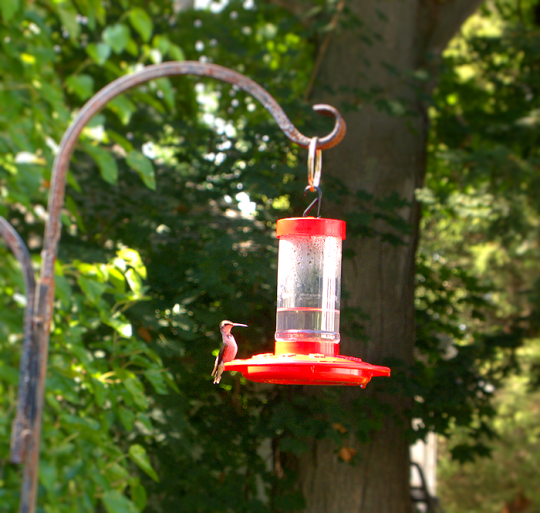
Just a PSA for everyone!! With spring coming around and the humming birds migrating back in. I just want to warn everyone do NOT no matter what use the “premade” red humming bird food. The red dye in the food is causing seizures and death among the birds. Instead you can make your own! Just use 2 cups water and half cup sugar!
GIVE THEM THE GOOD SUGAR WATERS they come every year to my feeders, I love these birds they deserve that premium warm sugar water
Also – don’t use brown sugar or honey, only refined white sugar!
many people don’t understand just why cat attacks are so deadly to birds. even if the bird receives what looks like a minor cut, cat saliva is extremely deadly to them and will poison them if it enters the bloodstream. even a scratch from a claw instead of a bitemark can kill them, as cats coat their claws in saliva when they clean their feet. if you find a bird that has been attacked by a cat, please bring it to a wildlife rehabber even if it seems “okay”. if your bird has been attacked by a cat, please bring it to an avian vet ASAP. it’s better to be safe than sorry!
Adding on: ASAP means “within hours,” not in a few days. It is a true emergency.
I see so many people let cats and birds “play” together 😞 I wish people would just think for one minute and realize prey animals should NEVER be around their predators
Not just cat saliva – ALL MAMMAL SALIVA IS TOXIC TO BIRDS. Cats, dogs, even YOUR saliva contains bacteria that can kill your bird! DO NOT let your bird eat out of your mouth, or stick their heads in your mouth. No matter how cute it is!
On a similar note – don’t let your other pets groom your bird for this reason. Not only can your bird ingest their saliva this way, it’s easy for them to be accidentally injured.
Tanagers (Family Thraupidae) represent a taxonomically-confused group of colorful granivorous and frugivorous birds largely found in the Neotropics (In fact, nowadays I supposed we can say they’re exclusively found in the Neotropics; such American species as summer, Western, hepatic, and scarlet tanager (Genus Piranga) have since been relegated to a different family altogether). While the scientific community is not in agreement on what a tanager exactly is, here’s what we do know:
Tanagers– as they are currently classified– represent 12% of all Neotropical birds and are the second largest taxonomic family currently described.
Many tanagers make their living as part of mixed-species flocks, sharing and defending a territory with numerous other birds.
While these birds are visually quite impressive, most tanagers are vocally disappointing, mainly employing chips, cheeps, and the occasional trill in their vocal repertoire.
Pictured are all members of the fabulous Genus Tangara, with some more information embedded in the caption.
This is a tough question, and a very big question. Since it’s just about impossible to objectively explain why birds are amazing (they are, btw), maybe I can explain why birds amaze me and why they’re the focus of both my career and a significant portion of my recreational time.
1. Birds are dinosaurs that you can hold today.
Flashback to 2010, a time when little Redstart was thinking about applying to college. For a while I was convinced I would pursue animation and go be some awesome art director of nifty animated films starring animals. Then I realized that a) I wasn’t good enough or motivated enough to make it, and b) having art as a career would ruin creating art for me. So, then it was back to my other passion: paleontology.
I literally applied to college planning to be a geology/biology double major with a long-term career goal of being a professor of paleobiology. I doggedly pursued this game until my sophomore year of college, when I discovered birds.
Birds are dinosaurs. Just about everyone knows this now (thank goodness). The big, significant realization here is that you can study dinosaurs today. Think about the magnificent breadth and depth of scientific questions you can ask about an animal when it’s right in front of you, instead of turned into rock and shattered into a million fragments! Don’t get me wrong; paleontology is an awesome field. But instead of dedicating my life to recreating the world of millions of years ago, I decided to work on unraveling the mysteries of today’s dinosaurs.
2. Birds are Pokémon.
Stay with me, now! As a wee youth I was obsessed with Pokémon. Wait, I’m still obsessed with Pokémon. Well, it turns out that birding and bird banding are just about the closest thing you can get in real life to filling out the Pokédex.
Birds have the Goldilocks number of species, which makes them incredibly appealing to pursue, study, identify, and watch. Think about it! Mammals, while are certainly *~*~*charismatic*~*~*, are mostly nocturnal. There are also like 10 of them in the world (yes, that’s an undersell). Lame! Insects and other invertebrates are amazing, but there are too goddamn many for many laypeople to really get into (side note: my alternate field would probably be malacology because I love Mollusca). Fish have some good numbers and variety, but require getting into this whole aquatic sphere– a different world entirely and one that is not readily accessible to those of us who matured in NYC.
So there’s the numbers game and their incredible charisma at play here. Humans have trained their companion psittacids and cacatuids to speak, to understand; as intelligent social animals, we can feel a mysterious connection with birds in the same way that most humans feel an inherent connection with your typical charismatic megafauna, such as wolves and lions (*eyeroll*).
3. Birds are diverse.
Cassowaries are three-toed behemoths that can communicate in rumbling infrasound like elephants and kick a grown man to death. Woodcocks can see in 360 degrees without a single turn of the head. The booted racket-tail is a hummingbird about the size of a quarter with a tail three times its body length that goes torpid every night after its daily frenzy of foraging for nectar. The Chiroxiphia manakins coordinate sexual display in an incredible show of teamwork, after which only one male gets to mate. The bowerbirds build ornate structures that rival some human creations, and then dance and sing in front of them for a mate.
Albatross can maintain a pair bond for decades, and once their chicks fledge they may not touch solid ground for three years. Steller’s eiders from both North America and Russia winter together on the sea ice of the Bering Strait, where they fish for molluscs in the cold. Bar-headed geese fly over the Himalayas. Arctic terns breed as far north as the Arctic circle and winter all the way south in Antarctica, in the longest migration known to the animal kingdom. Martial eagles kill and eat small antelope by flying them up high and dropping them to the ground. Starlings and mimids can imitate hundreds of sounds. Numerous seabirds can go their entire life without a single drink of freshwater due to their advanced salt glands.
…And so on. The breadth of the bird world is absolutely incredible. With roughly 10,000 species worldwide existing on every continent (something that cannot be boasted by many other taxonomic classes), birds have evolved to occupy so many amazing niches.
4. Birds matter.
Now, this isn’t to imply that other animals don’t matter! It is incredibly vital that we keep a steady stream of funding to all biological sciences, but I must say that in my work with birds I have always felt that the research I’ve been doing plays its part in the greater scheme of things.
Birds are an easily seen indicator species; their high sensitivity can be informative about how the world at large is doing. As climate changes and anthropogenic disturbance increases, we can see bird populations shifting their range and phenology from year to year.
Since they are so prominent, birds have also been among the numerous species to face untimely extinction; take the story of the magnificent great auk, for example, which was rapidly hunted into oblivion due to its flightlessness and colonial breeding strategy. Carolina parakeet, passenger pigeon, Bachman’s warbler, ivory-billed woodpecker, Labrador duck: these are all species that used to be seen in North America that are nowhere to be found today.
And it’s through some well-timed intervention spear-headed by biologists and conservationists that we have avoided the loss of other amazing bird species. The National Audubon Society keeps an egret in their logo, a nod to the birds that were almost destroyed in the hat trade. The Atlantic Puffin was completely extirpated from the Gulf of Maine until it was successfully reintroduced on Eastern Egg Rock. And remember the shitshow that was DDT? It was birds that let us know how much of a threat that pesticide was; brown pelicans, bald eagles, peregrine falcons, osprey, and more faced steep declines thanks to the substance.
These reasons just brush the surface of why birds are amazing– and yes, why I am constantly amazed by birds even though I look at them every day in my backyard or as part of my work. We haven’t even mentioned feathers, or vocalization, their incredible physiology, or the way they have inspired artists for centuries.
Getting into birds literally changed my life; it was a turning point for my career, for my mental health, and for my outlook on this incredible world that we live in. I want others to have similar realizations about the natural world! That’s why I run this blog, and that’s why I’ll never stop birding.
I feel like it’s necessary to make this post as someone who had no idea what they were doing when they got their first bird. This isn’t intended to shame Petco employees, who are just doing their jobs, or people who have taken advice from Petco in the past. This is just observations from someone who hates to see birds kept in subpar conditions.
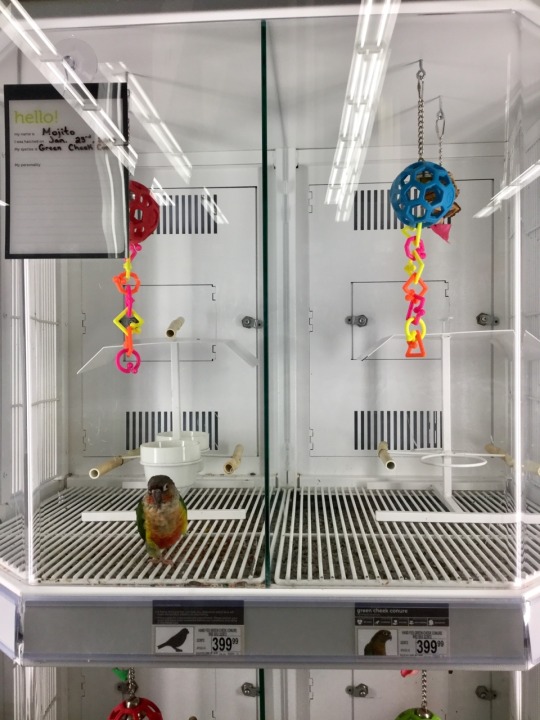
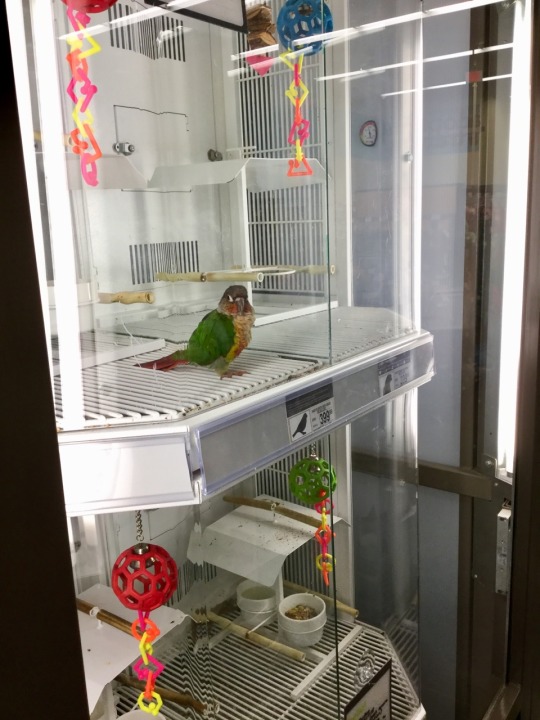
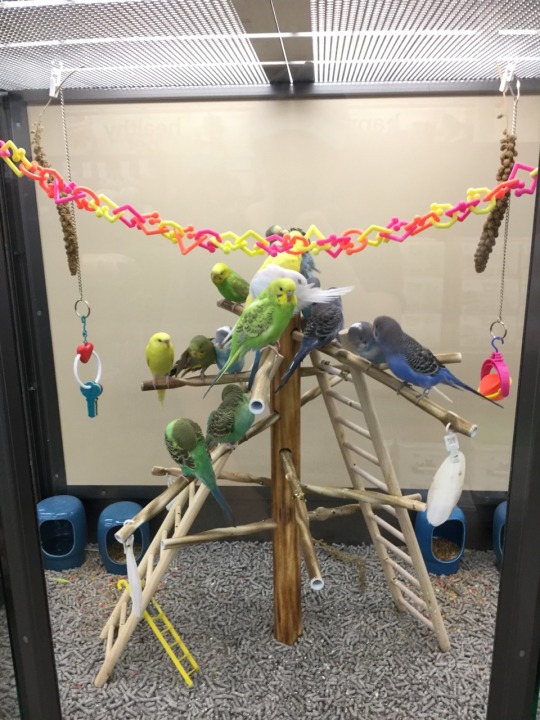
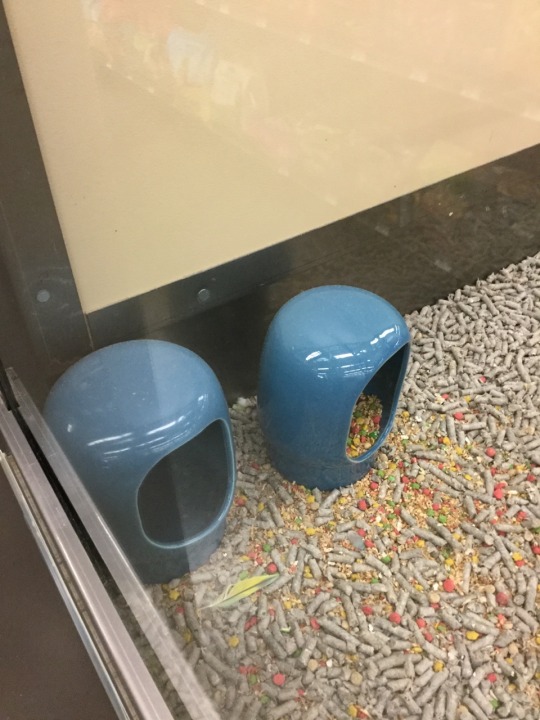
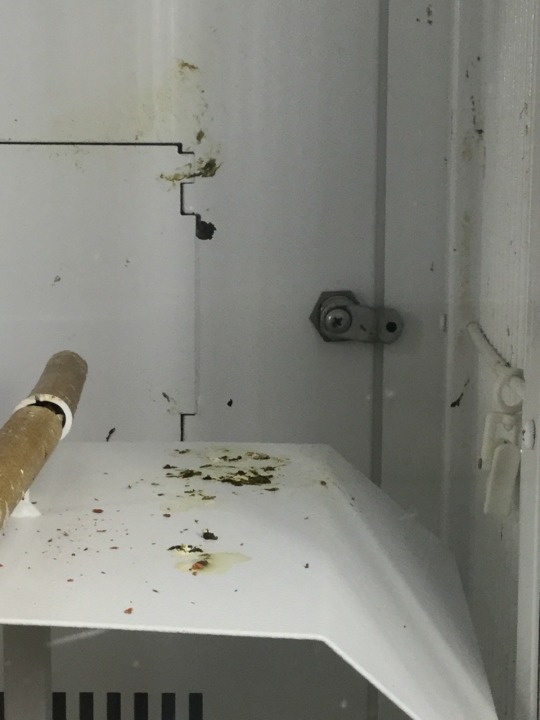
First off, let’s look at the way Petco treats their pet birds – and implies through doing so that it’s an acceptable standard of care for bird owners. These were all taken today at my local Petco.
Cages this small are not acceptable for any bird. It’s more important for a cage to be wide than tall; birds need to fly and this provides them the space to do so. This is suitable as maybe a quarantine cage at best. There definitely needs to be more toys as well, especially considering these birds stay in the cage all day and do not come out for interaction.
This is the budgie cage. This many birds should absolutely not be kept in a cage this small. Some of the birds were visibly stressed out, and got scared and upset when people walked by. There’s very few toys in here as well (though at least they have each other’s company). Millet is a treat; offering this much millet at a time is pretty unhealthy and shouldn’t be done. If you look closely, you can see the perches do not vary in texture or size and are all smooth. This is pretty awful for a bird’s feet. Birds need perches of varying texture, preferably 3-4 different kinds, or they can have conditions such as bumblefoot or problems gripping.
The birds are only fed pellets and seed (mainly seed). Even considering that budgies are grainivores, this is a pretty awful diet. They need plenty of fresh vegetables and fruit in their diet, and this is the kind of diet that leads to health problems over time.
There’s a buildup of droppings and debris in the cages – even on easily wipeable surfaces.
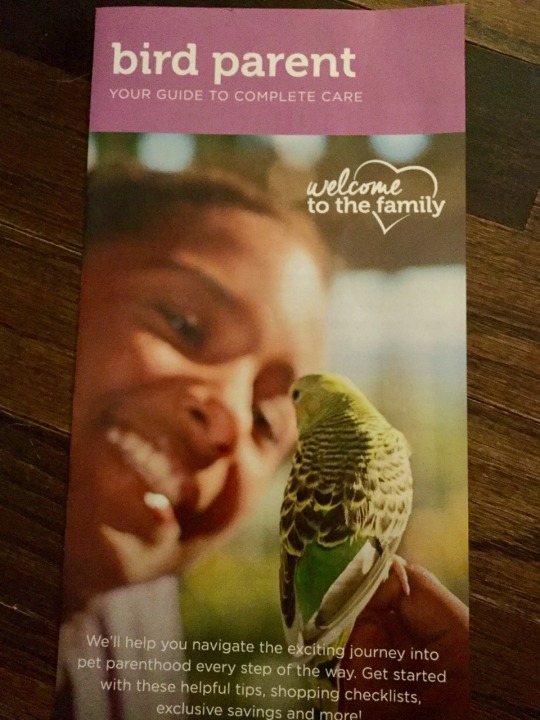
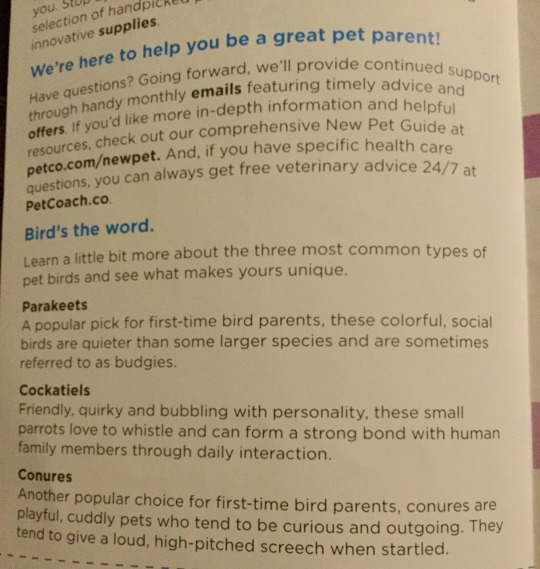
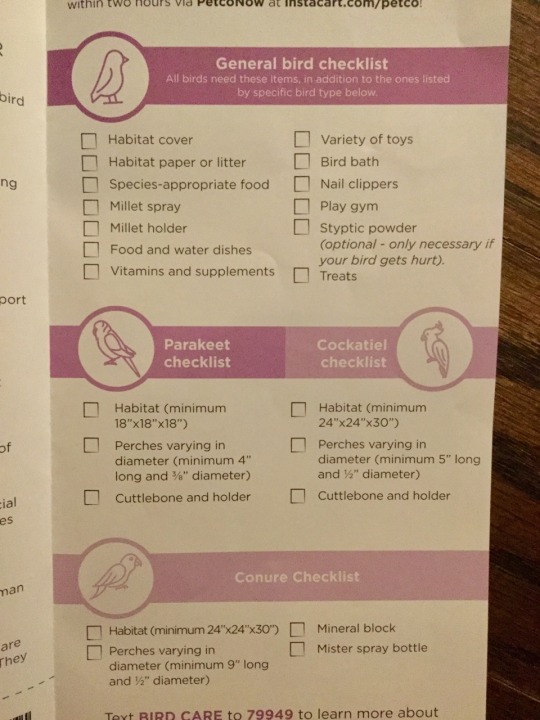
Now let’s take a look at the bird care brochures available near the bird section and at the register. Maybe they will advocate better birdkeeping practices?
Conures don’t give a high pitched screech when startled. Conures scream whenever they want. It’skind of cruel, honestly, to market them as a first-time, easy bird for someone who may be bringing them home to an apartment or noise-sensitive household. Conures are loud, and loud very, very frequently. Even green cheeked conures, which were sold in this Petco, aren’t great first time birds. They are loud, are known for being ‘beaky’, and are overall a handful. Are they awesome birds? Yeah! But you need to know what you’re getting into before purchasing them.
Let’s look at the “general bird checklist”. Pretty decent at first glance, even if they haven’t fulfilled many of the requirements for their own birds. But there are a few issues you should be aware of.
Vitamins and supplements are not necessary if your bird is eating a healthy diet. This doesn’t mean your bird will get sick if you DO give them, but it’s overall kind of a scam. Of course, Petco wants to max out the money they make off of your new buddy, but if you are feeding your bird well, this is absolutely not necessary.
Millet spray/Millet holder. “All birds need these items” being applied to this is absolutely bizarre. Many bigger bird species will not even touch millet due to how small it is. It’s a great treat, but is in no way crucial to your bird’s care, even if they do like it. It has very little nutritional content and should only be a treat, not a diet staple.
Styptic powder is something you shouldABSOLUTELY have on hand!! If you nick the quick of a bird’s toenail while clipping nails, or they have issues with breaking feathers or blood feathers, you will need styptic powder. Your bird’s blood will not clot and they can lose a significant amount of blood from minor injuries.
There’s nothing much wrong with the ‘individualized’ care guides – other than the big, glaring issue of cage sizes. All of these ‘minimum’ cage sizes are way, way too small. For reference, here is an 18 x 18 x 24 cage:
This doesn’t apply to just Petco. Please be wary of information from any chain pet store. Many of them are trying to make birds seem as easy as possible so you’ll buy one and make them more money. Birds are complicated and delicate creatures – PLEASE do your research from reputable sources before getting any new pet.
I just wanna throw my two cents in on how bad big pet stores can be with their birds and info. So my friend who I’ve know since high school, and who’s tiels I’m currently watching, got a pair of cockatiels from petco around 10ish years ago. Her family was told that both birds were male, around a year old, and that they were getting them for a great price at $200 for the two of them. Well cut to 4 years later and one of them lays an egg and it turns out they’re both female. Cockatiels aren’t too hard to sex and if they were at a year they would have had their adult feathers in by then, unless they were wrong with the age. Also I haven’t gotten a parrot from a breeder in a long time, like 14 years, but when my grandma got Candy she was $100 and she was a lovely hand feed bird who we got to go visit before we could take her home. What I’m saying is $200 for two cockatiels who are terrified of people wasn’t a ‘great price’, not that it matters, and it bothers me when people try selling animals the same way you would try to sell a car. Lastly I need to mention their feet. Both birds were missing parts of their toes or their whole toe on some parts of their foot. I brought this up to my clipper friend one day asking her what could have caused it and she said they were most likely bitten off by a larger parrot. My finch, who I got from petsmart, is also missing almost all of the toes on one of her feet. I also did have a friend from college who worked for petsmart and he did tell me that they don’t always take great care of their birds before they put them out for sell and injuries likes this were common. I don’t recommend getting animals from big pet stores and I never recommend listening to there advice. If you want an pet do your research and I don’t mean looking a one website, act like your a college kid writing your thesis paper.
It always breaks my heart I wanna save all the birds but they will just get new ones 😰





 today's bird