Found in northeastern Australia, these birds eat insects, seeds, and fruits, foraging mostly on the ground. Males build large mounds to incubate the eggs, maintaining a constant temperature by adding or removing decaying vegetation. After hatching, the chicks dig their way out of the mound, emerging fully feathered and able to survive on their own.
These birds are found only on several islands in Indonesia. They eat seeds and small invertebrates and are active mainly at night and during dawn and dusk, particularly around their nesting grounds. Nesting along the coasts in sandy areas heated by the sun and geothermal energy, they bury their large eggs, leaving them to hatch alone. The chicks dig out of their sandy nests after hatching, emerging fully feathered and independent. They are Endangered due to unsustainable harvesting of their eggs, as well as disturbance of their nesting areas and habitat destruction.
November 7, 2018 – Variegated Laughingthrush (Trochalopteron variegatum)
These laughingthrushes are found in fir, birch, and oak forests from northeastern Afghanistan east through Pakistan, India, and Nepal to southern China. They eat insects, fruit, and berries, foraging in pairs in the breeding season and in flocks of around 20 at other times of year. Breeding from April to August, they build shallow cup-shaped nests from grasses, dry leaves, and other materials.
turkeys are often regarded as dull, but that definitely isn’t the case with the ocellated turkey. these birds are native to a small range in mexico and south america. they are smaller than north american wild turkeys, but they have much more vibrant plumage. both males and females have iridescent colorful plumage, though females can be slightly more brown.


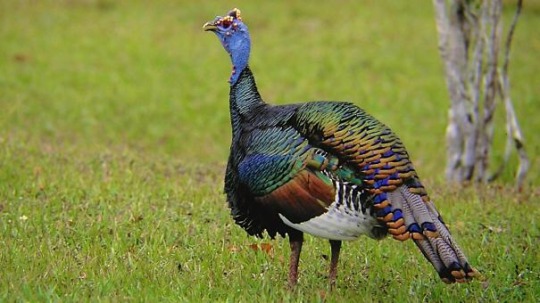
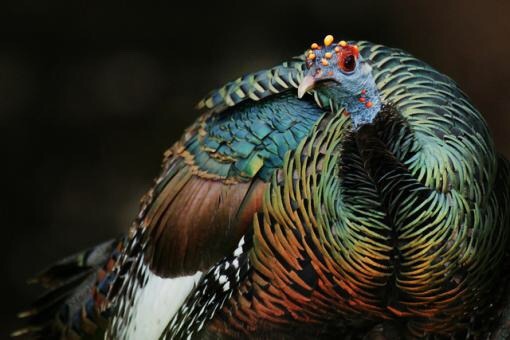
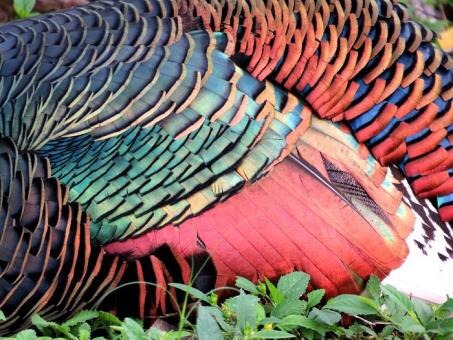
 today's bird