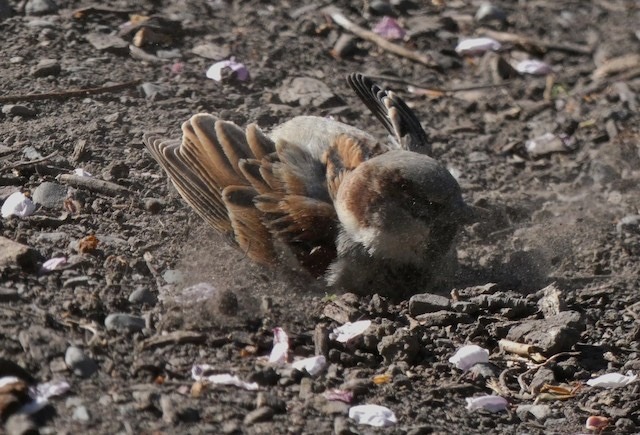
a house sparrow dustbathes on the ground. most birds produce oil from their preen gland that is used to keep the feathers healthy; dustbathing helps regulate the amount of oil on the feathers, and also can assist with removal of parasites from the body, penetrating to the skin where the bird may not be able to remove them.
the bourke’s parakeet is a small parrot native to australia. considered a ‘grass parrot’, the bourke’s parakeet mainly forages for grass seeds. the parakeets live in small flocks (though their numbers can grow during drought) and mate for life.
the kakapo is a unique parrot native to islands of new zealand. kakapo are the world’s only flightless parrot; they also are nocturnal, and are the only parrot with a lekking system, where males build large leks (bowl-like cleared areas) and call to attract females. the kakapo is also the world’s heaviest parrot, weighing anywhere from two to nine pounds. the kakapo is critically endangered, as prior to introduction of predators to their habitat, they were almost entirely predator-free and have no real way of defending themselves.
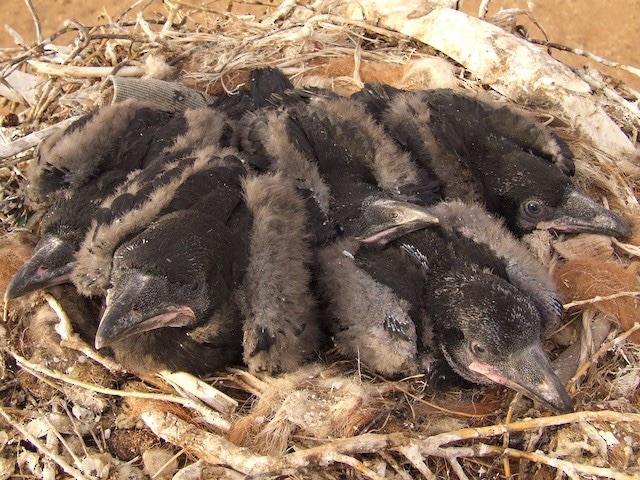
a nest full of baby common ravens. ravens are altricial, meaning that when they hatch, they are flightless and helpless, completely dependent on their parents. even after fledging the nest, the young rely on the parents for supplemental feeding.
the little blue heron is a small heron (only 24 inches in length) native to the united states and central america.
adult little blue herons have bluish-grey plumage. juveniles are white, and gradually gain their adult colors. juveniles are often found amongst the much bigger snowy egrets, and it’s theorized their coloration developed so they could blend in and be protected by the larger birds throughout their youth.
little blue herons mainly hunt in shallow water. they eat fish, shellfish, crustaceans, amphibians, small rodents and insects.
the little blue heron is currently rated least concern by the iucn, but their population numbers are decreasing.




 today's bird